At 30 weeks pregnant, you’re now three-quarters of the way through your pregnancy. You’re into your third trimester now, and so close to meeting your baby for the first time.
30 weeks pregnant: pregnancy symptoms and baby development

Explore pregnancy stages week by week
30 weeks pregnant is how many months?
If you’ve been asking yourself, ‘when does the 3rd trimester begin?’, you’ll be glad to know that you’re now a couple of weeks into it - you’re on the final stretch. 30 weeks in months is just over 7 - not long now until your parenting adventure begins.


From now on, your baby will be hard at work putting on weight - their main job until it’s time for them to arrive. As for you, you’re probably looking ahead to your labour and birth, and what your options are when it comes to pain relief.
Find everything you need to know about your baby’s development at 30 weeks, what pregnancy symptoms you can expect, and top tips for your labour and birth.
Your baby at 30 weeks pregnant
At 30 weeks pregnant, your baby is busy preparing for life outside the womb.
Their lungs are developing quickly, and every day they spend in the womb from now on will mean they’re less likely to need as much help breathing if they arrive early1. Putting those tiny lungs into action, your baby will practice their breathing techniques, and you may notice that they start to get hiccups, which some women feel through their bump2.
Your baby’s vision is developing too, and their eyes can now focus, ready for when they see your face for the first time3. In addition, your baby is learning to use their sucking reflex and may well be sucking those tiny fingers and thumbs, a skill they’ll need for their first feeds4.
Many babies assume the head-down position at this point in pregnancy to be in the right position for labour and birth. However, there’s still plenty of time for this to happen, so don’t worry if this isn't the case right now. Your midwife will monitor your baby’s position during your antenatal appointments.
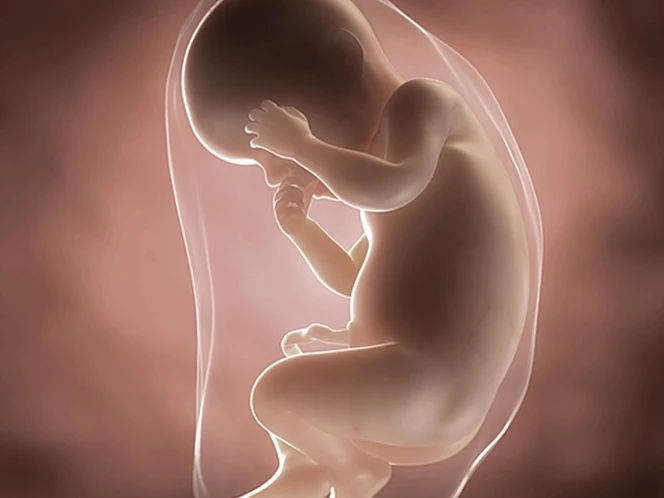 Your baby's development at 30 weeks
How big is my baby at 30 weeks pregnant, and what do they look like?
At 30 weeks pregnant, your baby (or foetus) is just under 40cm from their head to heel, which is about the size of a cabbage3.
As the third trimester continues, your baby’s focus will be on growing bigger, and the soft, fine hair (‘lanugo’) that has been covering your baby’s delicate skin will start to fall away2.
Pregnancy at 30 weeks (third trimester): what changes are happening in your body?
At 30 weeks pregnant, you might be having trouble sleeping, even though you might be tired from carrying your 30-weeks-pregnant bump.
Sleep problems in pregnancy can be the result of struggling to get comfortable or frequent trips to the loo during the night5. It might help to curl up on your side with a cushion under your bump, and you could also try sleeping with a pillow between your legs6. Take any opportunity to rest and accept help when offered - your body will thank you for it!
You might also notice strange or disturbing dreams around this time, which could be about your baby, labour or birth5. This is something many pregnant women experience and is likely caused by a combination of hormones and any anxiety you’re feeling. Talking about your dreams with friends and family can help put them in perspective. If you’re struggling with low mood or anxiety at any point, talk to your midwife or doctor3.
30 weeks pregnant: signs and symptoms
As your 30-week pregnant bump gets bigger, you may notice narrow streaks or lines on your skin called stretch marks. Stretch marks can be red, pink, purple or brown, and appear on various parts of your body, including your bump, breasts and thighs.
Stretch marks are completely harmless and will likely fade after your baby is born7. Moisturising your skin daily can help keep your skin feeling comfortable and keep any itching at bay.
As your baby grows and presses on your stomach in your third trimester, you might experience indigestion (also called heartburn or acid reflux). This can cause bloating, gas or nausea, and a burning feeling in your chest8.
Heartburn and indigestion are more common after 12 weeks and can continue right up to your due date9. If you’re struggling to manage your symptoms, and you’re struggling to sleep due to heartburn, speak to your doctor or midwife, as they may be able to prescribe medication that can help.
To lessen symptoms of indigestion, try eating smaller meals more often rather than three large meals a day, and avoid eating in the few hours before you go to bed10.
Pregnancy hormone changes can cause skin changes like spot breakouts and acne11. This should settle down on its own as your hormones go back to normal. If your acne is severe and affecting your mood, there are some treatments that your GP may prescribe that are safe to use in pregnancy, such as certain antibiotics11.
Piles (or haemorrhoids) are common in pregnancy. They happen when the blood vessels in and around your bottom become swollen or enlarged and can be caused by constipation (another common pregnancy symptom)12.
Symptoms of piles include itching or soreness around your anus, pain when going to the toilet, and bright red blood when you wipe12.
To prevent piles, eat a healthy, balanced pregnancy diet with plenty of sources of fibre, such as wholegrains, fruit, and vegetables12.
You could feel faint or dizzy at 30 weeks pregnant because of the hormonal changes happening in your body. It’s most common to come over dizzy if you stand up too quickly, so try to move slowly if you’ve been sitting or lying down for a while13.
It’s common to feel anxious or low sometimes during pregnancy, even if you’re excited about meeting your new arrival. Having a baby is a big life event that can cause many different emotions, all completely normal14.
Avoid keeping your feelings bottled up during pregnancy – speak to friends and family about how you’re feeling. If you’re feeling low or anxious a lot of the time, speak to your GP or midwife, who will be able to offer further support14.
Week 30 pregnancy tips
Here are some things to think about at 30 weeks pregnant to ensure your preparation for labour, birth, and parenthood.
Get plenty of iron in your diet
Iron is vital for your baby’s cognitive development (15), and carries oxygen around your body in your blood cells, passing it to your baby through the placenta (16).
That's why it’s important to eat plenty of iron-rich foods throughout pregnancy, such as (17):
- Red meat (make sure it’s fully cooked through with no pink bits)
- Beans like red kidney beans, chickpeas and edamame beans
- Dried fruit
- Nuts
- Fortified breakfast cereals
- Soybean flour
Most pregnant women can maintain adequate iron levels in the blood from a balanced diet. However, low iron levels are a common pregnancy symptom, and you may be prescribed a supplement if that’s the case for you (18).
Spotting the signs of labour
At 30 weeks pregnant, it’s a good idea to know the signs of labour and how to spot them. Some telltale signs of labour include19:
- Regular contractions
- A plug of mucus (often called a ‘show’) coming away from your cervix
- Your waters breaking
- Feeling an urge to go to the toilet
Towards the end of your pregnancy, you might experience Braxton Hicks contractions (or ‘practice contractions’)19. It can be tricky to tell the difference between Braxton Hicks and labour contractions, especially if this is your first pregnancy.
Some of the differences include19:
- Braxton Hicks can be uncomfortable but are not usually painful
- Braxton Hicks are usually irregular, but labour contractions follow a pattern
- Braxton Hicks contractions don’t build up, whereas labour contractions will get more intense and closer together
If you’re not sure, you can always call your midwife or labour unit, who will ask you more questions about your symptoms.
Kegel exercises
Pelvic floor exercises (also called kegel exercises) can help you prepare for labour and birth by strengthening your pelvic floor (the muscles stretched between your pubic bone and spine)20.
You can do pelvic floor exercises by20:
- Lying or sitting comfortably
- Squeezing the muscles of your pelvic floor as if you’re trying to stop yourself from going to the loo, then relaxing
- Try squeezing both fast and slow, then holding the squeeze and relaxing
30 weeks pregnant: next steps
Consider the RSV vaccination
By now, you should have been offered your whooping cough vaccination, as this is usually given at around week 16 of your pregnancy. If you haven’t been offered this yet, have a chat with your midwife about your options.
The RSV vaccine protects against respiratory syncytial virus (RSV), which is a common virus that can make babies very poorly. Getting the vaccine while you’re pregnant offers the best protection against RSV for your baby21.
Expectant mums are usually offered the RSV vaccine when they enter their third trimester at 28 weeks pregnant, but you can have the vaccination later if you need to, right up until you go into labour21.
Pack your hospital bag
As you move through the third trimester and get closer to your due date, think about what things you’ll need during your labour and birth and any home comforts you’d like once your baby has arrived. Our handy hospital bag checklist is a fantastic resource, and you can download it for free here.
Pain relief
At 30 weeks pregnant, you might be talking with your midwife about the type of birth you want (do you want a water birth, for example?) and your pain relief options, something you should note down in your birth plan if you’ve chosen to make one.
FAQs at 30 weeks pregnant
Is 30 weeks considered 8 months pregnant?
Not quite – at 30 weeks pregnant you’re just over 7 months pregnant.
Is it okay to give birth at 30 weeks?
If your baby is born before you reach 37 weeks pregnant, they’re considered premature. They’ll likely be quite small and they may have a higher risk of some health issues. But after 27 weeks, your baby is slightly more developed and may not need as much intensive care as babies born earlier22.
If you think you’re going into labour before 37 weeks, call your midwife or maternity unit straight away23.
Can I tell if my baby will come early?
There are a few reasons your baby could be born early, such as if you’re having twins or multiple babies, or you’ve had a health condition such as pre-eclampsia during your pregnancy22.
Sometimes there’s no clear reason or signs that you’ll go into premature labour24. Getting familiar with the signs of labour is a good idea so you recognise them even if they happen early.
What should I pack in my hospital bag?
There’s no harm in being prepared and packing your hospital bag as early as 30 weeks pregnant.
Some hospital bag essentials include25:
- Your birth plan and other notes
- Loose, comfy clothing
- Something to sleep in
- A toiletry bag containing things like your toothbrush and deodorant
- Healthy snacks
- Clothes, nappies and a blanket for your baby
Download our full hospital bag checklist with the essentials for mums, babies and birthing partners here.
Tommy's (2022). 30 weeks pregnant: baby's development, antenatal classes and caesarean sections [online] Available at https://www.tommys.org/pregnancy-information/im-pregnant/pregnancy-week-by-week/30-weeks-pregnant [Accessed May 2025]
NHS Inform. How your baby develops week to week [online 2024]. Available at https://www.nhsinform.scot/ready-steady-baby/pregnancy/your-baby-s-development/how-your-baby-develops-week-to-week/#week-25-to-32. [Accessed May 2025]
NHS Best Start in Life. Week 30 [online] Available at https://www.nhs.uk/start-for-life/pregnancy/week-by-week-guide-to-pregnancy/3rd-trimester/week-30/ [Accessed May 2025]
NHS 111 Wales (2023). 29 to 32 weeks [online] Available at https://111.wales.nhs.uk/LiveWell/Pregnancy/29to32weeks/ [Accessed May 2025]
NHS (2024). Tiredness and sleep problems in pregnancy [online]. Available at https://www.nhs.uk/pregnancy/related-conditions/common-symptoms/tiredness/ [Accessed May 2025]
NHS Best Start in Life. 19 weeks pregnant [online]. Available at https://www.nhs.uk/start-for-life/pregnancy/week-by-week-guide-to-pregnancy/2nd-trimester/week-19/#sleep. [Accessed October 2025]
NHS. Stretch marks in pregnancy [online 2022]. Available at https://www.nhs.uk/pregnancy/related-conditions/common-symptoms/stretch-marks/ [Accessed May 2025]
NHS. Indigestion and heartburn in pregnancy [online 2023]. Available at https://www.nhs.uk/pregnancy/related-conditions/common-symptoms/indigestion-and-heartburn/ [Accessed May 2025]
NHS Inform. Common problems in pregnancy [online 2025]. Available at https://www.nhsinform.scot/ready-steady-baby/pregnancy/health-problems-in-pregnancy/common-problems-in-pregnancy/. [Accessed May 2025]
NHS. Indigestion and heartburn in pregnancy [online 2023]. Available at https://www.nhs.uk/pregnancy/related-conditions/common-symptoms/indigestion-and-heartburn/ [Accessed May 2025]
NHS. Acne [online 2023]. Available at https://www.nhs.uk/conditions/acne/ [Accessed May 2025]
NHS. Piles in pregnancy [online 2024]. Available at https://www.nhs.uk/pregnancy/related-conditions/common-symptoms/piles/ [Accessed May 2025]
NHS. Common health problems in pregnancy [online 2024]. Available at https://www.nhs.uk/pregnancy/related-conditions/common-symptoms/common-health-problems/ [Accessed May 2025]
NHS. Feelings, relationships and pregnancy [online 2023]. Available at https://www.nhs.uk/pregnancy/support/feelings-and-relationships/ [Accessed May 2025]
McCann S, Perapoch Amadó M, Moore SE. The Role of Iron in Brain Development: A Systematic Review. Nutrients. 2020 Jul 5;12(7):2001. doi: 10.3390/nu12072001. PMID: 32635675; PMCID: PMC7400887.
Institute of Medicine (US) Committee on Nutritional Status During Pregnancy and Lactation. Nutrition During Pregnancy: Part I Weight Gain: Part II Nutrient Supplements. Washington (DC): National Academies Press (US); 1990. 14, Iron Nutrition During Pregnancy. Available from: https://www.ncbi.nlm.nih.gov/books/NBK235217/
NHS. Iron [online 2020]. Available at https://www.nhs.uk/conditions/vitamins-and-minerals/iron/ [Accessed May 2025]
NHS. Vitamins, supplements and nutrition in pregnancy [online 2023]. Available at https://www.nhs.uk/pregnancy/keeping-well/vitamins-supplements-and-nutrition/ [Accessed May 2025]
NHS. Signs that labour has begun [online 2023]. Available at https://www.nhs.uk/pregnancy/labour-and-birth/signs-of-labour/signs-that-labour-has-begun/ [Accessed May 2025]
NHS. Exercise in pregnancy [online 2023]. Available at https://www.nhs.uk/pregnancy/keeping-well/exercise/ [Accessed May 2025]
NHS. RSV vaccine [online 2024] Available at https://www.nhs.uk/vaccinations/rsv-vaccine/ [Accessed May 2025]
NHS Inform. Premature babies [online 2025]. Available at https://www.nhsinform.scot/ready-steady-baby/labour-and-birth/after-the-birth/premature-babies/ [Accessed May 2025]
NHS. Premature labour and birth [online 2024]. Available at https://www.nhs.uk/pregnancy/labour-and-birth/signs-of-labour/premature-labour-and-birth/ [Accessed May 2025]
NHS Royal Berkshire. Premature, pre-labour rupture of membranes (PPROM) [online 2023]. Available at https://www.royalberkshire.nhs.uk/media/f3tif0zp/premature-prelabour-rupture-of-membranes_sep23.pdf [Accessed May 2025]
NHS Best Start in Life. Hospital bag checklist - what to pack for you and your baby [online]. Available at https://www.nhs.uk/start-for-life/pregnancy/preparing-for-labour-and-birth/hospital-bag-checklist/ [Accessed May 2025]
Last reviewed: November 2025
Reviewed by Nutricia’s Medical and Scientific Affairs Team

related articles
Read More






Need some help?
You can get quick answers to common questions in our FAQs.
Alternatively, if you need help with general pregnancy or baby advice, or maybe on using or ordering our products - our expert team are always on hand to talk about feeding your baby.