By the time you’re 29 weeks pregnant, your baby will be increasingly active and you can expect to feel them moving – a lot. Your third trimester also sees the beginning of a growth spurt, in which your baby’s weight will triple. Vitamin K remains important in your diet to aid blood clotting, so ensure you continue to eat a healthy balanced diet
29 weeks pregnant

Explore pregnancy stages week by week
Roll with it
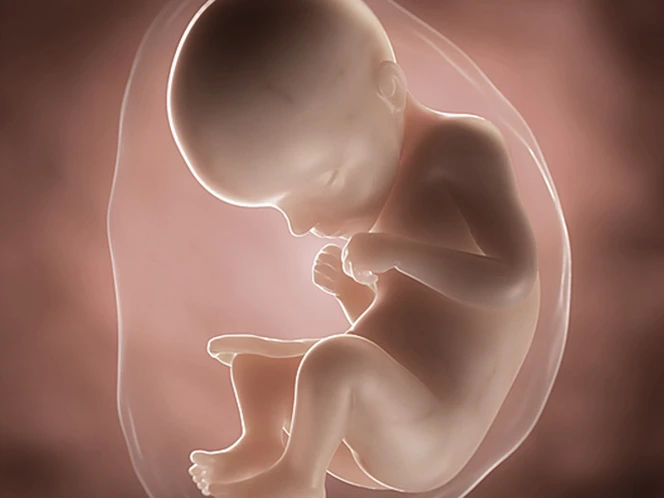 Your baby's development at 29 weeks
In week 29 of pregnancy, the size and weight of each baby varies considerably. But on average, they are roughly 26cm – measured from the top of their head to their bottom – and weigh about 2lb 8oz. However, yours may be bigger or smaller than this1.
What is certain is that between now and the end of your third trimester, your baby will grow considerably, doubling, or in some cases, tripling in weight2. And, while they are not yet ready to meet the world, their brain is developed enough to control essential functions such as breathing and body temperature1.
Another organ, or pair of organs, that is beginning to function well in week 29 is the lungs. The complex network of air sacs and smaller airways within them is developed enough to breathe air by this stage, but they are by no means complete and your baby would most likely need extra help from a ventilator if they were to be born at this stage1. Their lungs will continue to develop throughout pregnancy and into childhood3.
Your baby continues to be very active at this stage.

Join Aptaclub for a chance to win a £100 John Lewis voucher, plus expert feeding advice, expert parenting tools, helpful checklists and the latest deals straight to your inbox.
By registering you're confirming you agree with our T&Cs and Privacy Policy. You can opt out anytime.
Your baby will continue to be very active during week 29, and you will probably notice lots of foetal movement – somersaults, prods and pokes as well as strong kicks1.
While there is no set number of movements you should feel each day, you should be aware of your baby’s own patterns; perhaps they are more active after you have eaten, or when you sit down to relax at night.
Every pregnancy is different, but if you notice a change in your baby’s movement patterns, let your midwife or hospital know.
Thinking ahead – vitamin K for labour and birth
Although only required in tiny amounts – around 0.001mg a day per kilo of body weight4 – vitamin K remains an important component in your pregnancy diet. Vital for blood clotting, a lack of this vitamin in pregnancy can lead to complications for your baby after birth5. Although rare, it can lead to spontaneous bleeding and bruising anywhere in the body. A healthy level of vitamin K allows the blood to clot normally and reduces any such risks.
Most people get enough vitamin K in their diets without making an effort and it can also be made by some of the bacteria in your gut6. So while it’s not a nutrient you need to pay special attention to, it’s worth ensuring you are including some of the vitamin K sources listed below as part of your healthy pregnancy diet.
While vitamin K deficiency is rare in babies, most are given a booster injection after they are born.
While vitamin K deficiency is rare in babies, most are given a booster injection after they are born.
Next Steps
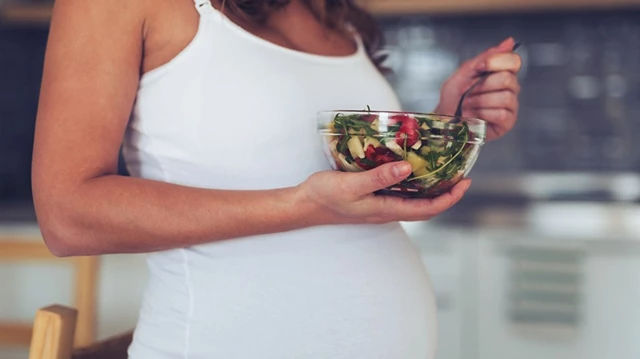
Include these vitamin K-rich foods as part of your healthy, balanced diet:
- Green, leafy vegetables such as spinach, broccoli, cabbage and kale
- Vegetable oils, especially soya bean oil
- Eggs
- Lean meat
- Dairy products
related articles
Read More





- Deans A. Your New Pregnancy Bible, The experts’ guide to pregnancy and earlyparenthood. 4th ed. London: Carroll & Brown Publishers Limited, 2013. pp.44-45.
- Murkoff H, Mazel S. What to Expect When You’re Expecting. 4th ed. London: Simon & Schuster Ltd, 2009. p.281.
- Regan, L. Your pregnancy week by week. London: Dorling Kindersley Limited, 2013. p. 203.
- Department of Health. Report on Health and Social Subjects 41. Dietary Reference Values for Food Energy and Nutrients for the United Kingdom. London TSO. 1991.
- NHS UK. What happens straight after the birth? [Online]. 2014. Available at: www.nhs.uk/Conditions/pregnancy-and-baby/Pages/what-happens-straight-after-the-birth.aspx [Accessed August 2016].
- British Nutrition Foundation. Vitamins –vitamin K [Online]. 2009. Available at: www.nutrition.org.uk/nutritionscience/nutrients/vitamins?start=5[Accessed August 2016].
Last reviewed: 11th June 2019
Reviewed by Nutricia’s Medical and Scientific Affairs Team