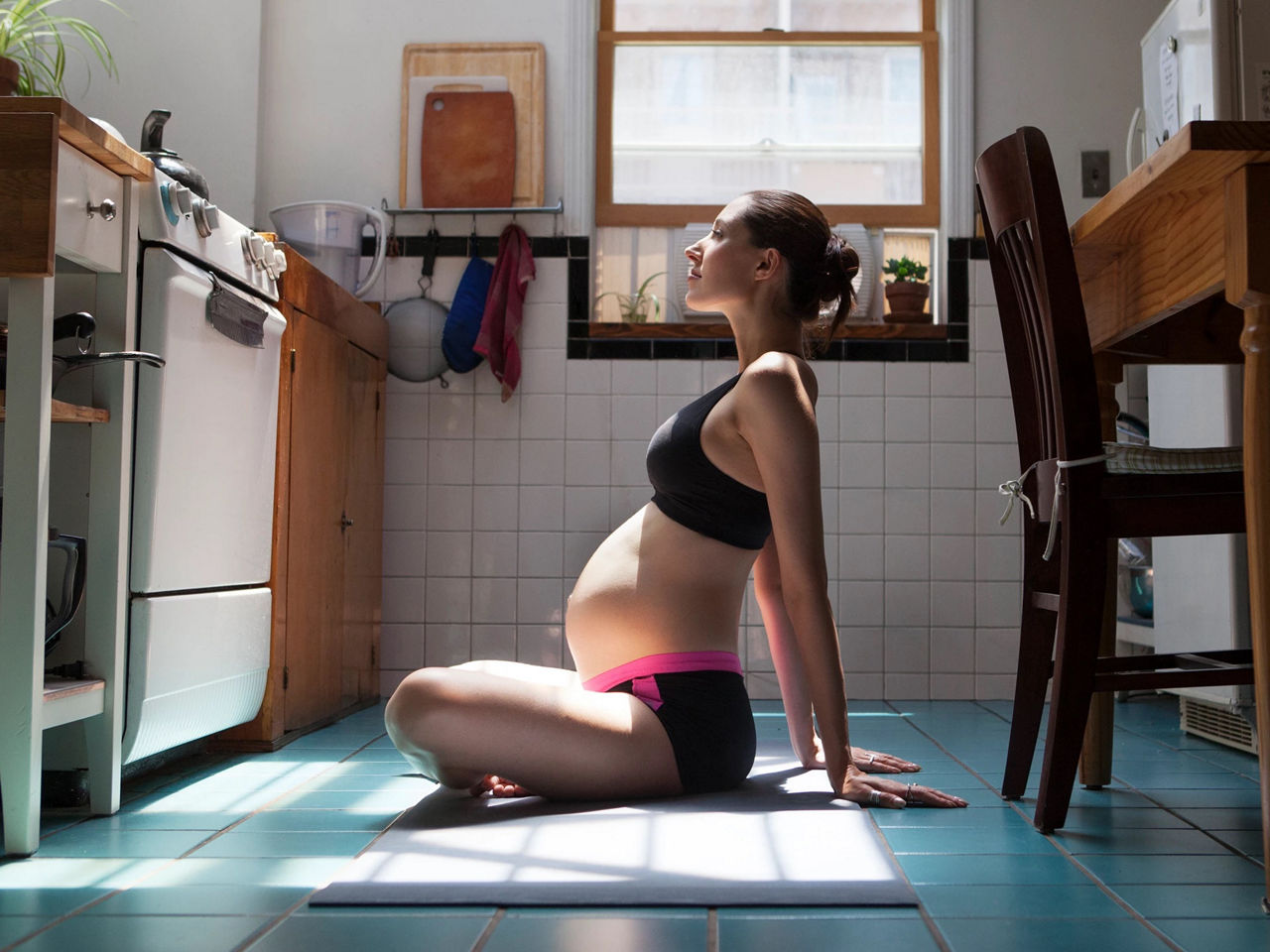
You’ve just entered month 6 of your pregnancy at 23 weeks. It might be hard to believe, but there are just 3 months left until your due date. However, they’ve still got a lot of growing to do before that time comes.
23 weeks pregnant: your guide to baby’s development & symptoms

Explore pregnancy stages week by week
23 weeks pregnant is how many months?
Month 6 (Trimester 2)


At 23 weeks pregnant, lots is happening for you and your baby. While they continue to grow and develop, you might notice that your baby is starting to press on your ribs or stomach, causing new aches and discomfort. Getting plenty of rest and eating a balanced diet can help when it comes to managing any symptoms.
Keep reading to learn more about common 23 weeks pregnant symptoms, as well as tips on getting a good night’s sleep and how your baby is developing in your womb.
Your baby’s development at 23 weeks
Now that you’re 23 weeks pregnant, your baby is reaching new developmental milestones as they prepare for life outside the womb. Let’s take a look at how big your baby (or foetus) is at 23 weeks, and how they are developing.
How big is your baby at 23 weeks?
Your baby (or foetus) at 23 weeks is about 28.9cm from head to heel, which is around the size of a mango. Their limbs are now in proportion, and they’re starting to look a little more like a newborn1. Their skin may still be wrinkled and translucent, but as the weeks go on, they’ll lay down more layers of fat and their skin will appear smoother2.
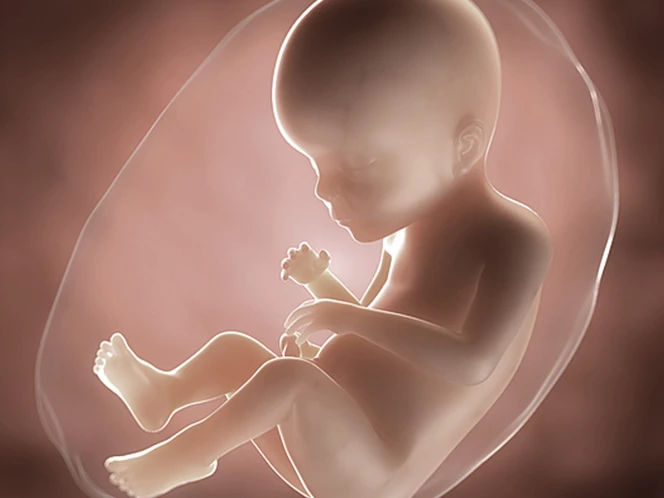 Baby development at 23 weeks
Your baby’s senses and movements
Now that your baby is growing, their movements will feel less like flutters and more like clear kicks and jabs. You might be able to see their movements as well as feel them in your bump, which can look a little strange at first1. You should feel your baby’s movements right up until labour. If they slow down or stop, contact your midwife straight away3.
Your baby has been able to hear noises from inside and outside your body for a while. But at around 26 weeks, you might notice that they move in response to different noises. For example, they might jump at loud noises or turn over when they hear your voice4.

Join Aptaclub for a chance to win a £100 John Lewis voucher, plus expert feeding advice, expert parenting tools, helpful checklists and the latest deals straight to your inbox.
By registering you're confirming you agree with our T&Cs and Privacy Policy. You can opt out anytime.
Your body & common symptoms at 23 weeks
Pregnancy at 23 weeks can bring with it some brand new symptoms, as well as the continuation of some that you might already be familiar with. Let’s take a look at some of the most common 23 weeks pregnant symptoms.
As your baby grows and your posture changes to accommodate them, you may notice more aches and pains in your lower back5. When you can, try to sit or stand up straight to help ease some of the pressure.
You can also try5:
- Tucking your hands under your bump when standing
- Supporting your back with a cushion when sitting down
- Wearing comfortable, supportive shoes
- Getting plenty of rest
At around 23 weeks, your rib cage is expanding to give your baby bump more room to grow, and you might notice some pain in your ribs as a result1.
You might also feel more out of breath than usual as your growing baby puts some pressure on your lungs1. The best thing to do to help ease these symptoms is to listen to your body and get plenty of rest.
If you get a sudden feeling of breathlessness along with heart palpitations and paler-than-usual skin, get in touch with your midwife6.
Now that you’re 23 weeks pregnant, you may find that you’re having trouble getting enough sleep on a night. This can be due to your bump making it more difficult to get comfortable, as well as more frequent trips to the toilet7.
The safest sleeping position at this stage in your pregnancy is on your side. You can try making this more comfortable using extra pillows between your knees and to support your bump7. You can even buy special pregnancy pillows that can help with this.
If you’re struggling to sleep at night, make sure you’re getting plenty of chances to rest or nap during the day.
In your second trimester, you might notice what’s known as a ‘linea nigra’ or ‘pregnancy line’ forming down the middle of your stomach. This is caused by normal skin pigmentation during pregnancy8.
This is completely normal and harmless, often fading on its own within a few months of giving birth8.
Some women find that they feel more forgetful or notice brain fog during pregnancy, which is often called ‘baby brain’9. Baby brain isn’t a scientifically proven medical condition. If you do notice the symptoms, they’re most likely caused by tiredness and having lots to think about as your pregnancy progresses.
During pregnancy, your skin becomes more sensitive. That means that you’re at greater risk of sunburn, even on cloudy days1. It’s important to protect your skin by wearing a high-factor suncream every day, and to stay out of the sun as much as possible.
As your pregnancy progresses, you may notice stretch marks appearing on your stomach, breasts and thighs. These are purple, pink, or brownish lines that are cause by your skin stretching. Stretch marks a very common, affecting around 8 out of 10 pregnant women. They’re not harmful, and may fade and get paler in colour once your baby is born10.
During your second trimester, you might start to get what are known as ‘Braxton Hicks contractions’ or ‘practice contractions’11. Braxton Hicks contractions happen when the muscles of your uterus contract and relax as your body prepares for what will happen during labour.
You can usually tell the difference between Braxton Hicks contractions and the real thing because, while practice contractions can be uncomfortable, they’re not usually painful, and they shouldn’t get more intense or frequent over time like labour contractions do11.
If you’re in any doubt about any pains or twinges in your stomach, it’s always best to get in touch with your midwife for advice and reassurance.
Your body tends to produce more vaginal discharge than usual during pregnancy to protect you and your baby from possible infections. This discharge will usually be thin and clear or milky white. If your vaginal discharge becomes green or yellow or has an unpleasant smell, get in touch with your midwife or doctor, as this could be a sign of an infection12.
Your growing baby could well be pressing on your stomach at week 23, which, along with your pregnancy hormones, can lead to indigestion or heartburn. Indigestion can come with symptoms like a burning feeling in your chest, feeling bloated, and feeling or being sick13.
Try eating smaller meals more often and avoiding rich, fatty or spicy foods to prevent indigestion13. Read more about eating a healthy, balanced diet in pregnancy here.
At 23 weeks pregnant, you might be experiencing headaches13. Headaches are a fairly common symptom during pregnancy, and they should improve as you get further along.
You can help ease the symptoms in the meantime by14:
- Taking paracetamol (always speak to your midwife and follow the instructions on the pack).
- Drinking lots of water.
- Getting plenty of rest.
Hormonal changes during pregnancy increase the blood supply to your skin, making you feel warmer than usual and causing you to sweat more15.
It can help to15:
- Wear loose clothes made from natural fibres like cotton.
- Wash more frequently to feel fresh.
- Keep your room cool using electric fans.
Remember to keep drinking plenty of water to stay cool and hydrated.
Health & nutrition in week 23
The importance of calcium in your diet
Calcium is an important part of your diet, whether you’re pregnant or not. It contributes to healthy teeth and bones and supports many other essential functions in the body. The World Health Organization (WHO) recommends that pregnant women get 1200mg of calcium per day to support their babies’ development and their own health16.
Your body can’t make calcium, and you’ll need to get the amount you need from your diet. Sources of calcium include17:
- Dairy products like milk, cheese, and yoghurt.
- Soya drinks with added calcium.
- Leafy greens like rocket, watercress and kale.
- Tofu.
- Fish with bones, like sardines and pilchards.
- Fortified foods.

The science behind calcium, powered by Nutricia
Almost every cell in your body uses calcium in some way, and as your pregnancy develops, your body’s ability to absorb calcium increases16.
Most people know that calcium is important for healthy teeth and bones, but it plays an important role in keeping the rest of your body healthy too. It really is a micro-mineral, and it supports your metabolism, muscle and nerve function, as well as gut health18.
If you take medication for hypothyroidism, talk to your doctor or midwife about whether it’s safe to take a calcium supplement at the same time19.
Managing iron levels
During pregnancy, you’ll need more iron to support your baby and avoid developing iron deficiency anaemia. The World Health Organization recommends that pregnant women get 30mg - 60mg of iron daily20.
Foods that contain iron include17:
- Green, leafy vegetables
- Dried fruit and nuts
- Lean meats
- Many breakfast cereals
Your iron levels will be monitored throughout your pregnancy. If they become low, your GP or midwife may recommend that you take iron supplements17.
Your pregnancy checklist for week 23
Here are some of the things you might want to start thinking about at 23 weeks pregnant.
Preparing for maternity leave
If you haven’t done so already, now is a good time to tell your employer that you’re pregnant. The latest you should leave this is 15 weeks before your due date, which tends to work out around week 251.
You might want to start thinking about your plans for maternity leave, such as how long you want to take off. You’re entitled to 52 weeks of maternity leave with the right to return to work, and 39 weeks’ maternity pay if you meet the criteria21.
Tips for a good night’s sleep
If you’re having trouble sleeping, try these tips to help you wind down22:
- Avoid eating within a few hours of going to bed, particularly if you suffer with heartburn.
- Use relaxation techniques such as ‘beditation’ to calm your mind before going to sleep.
- Avoid using your phone or other screens one hour before bed.
- Try to stay active during the day – a gentle walk or swim can work well.
If you’re still struggling to sleep and it’s starting to impact your mood and emotions, don’t bottle it up. It’s important to talk about your feelings with a loved one, GP or midwife.
Frequently asked questions at 23 weeks pregnant
Is my baby fully developed at 23 weeks?
No, your baby isn’t fully developed yet. Even though they look more like a newborn, they still have more growth and development to do before they’re ready for the outside world.
Once you reach 24 weeks pregnant, your baby is considered ‘viable’, meaning that they would have a chance of surviving outside the womb given the right specialist support23.
When should I start packing my hospital bag?
You should try to have your hospital packed at least 3 weeks before your due date, but it’s never too early to get organised. If you’re starting to think about what you’ll need to bring with you to the hospital, our hospital bag checklist is a great place to start.
When do Braxton Hicks contractions start?
Braxton Hicks contractions can happen at any time, but are most common in the last few months of pregnancy11. Some people won’t notice any Braxton Hicks contractions at all, so don’t worry if this isn’t something you experience24.
- NHS Best Start in Life. Week 23 [online] Available at https://www.nhs.uk/best-start-in-life/pregnancy/week-by-week-guide-to-pregnancy/2nd-trimester/week-23/ [Accessed October 2025]
- HSE (2022). 25 to 28 weeks pregnant [online]. Available at https://www2.hse.ie/pregnancy-birth/baby-development-pregnancy-stages/stages/25-28-weeks/ [Accessed October 2025]
- NHS (2024). Your baby's movements [online]. Available at https://www.nhs.uk/pregnancy/keeping-well/your-babys-movements/ [Accessed October 2025]
- NHS Essex Partnership University (2023). Bump [online] Available at https://www.eput.nhs.uk/services/childrens-speech-language-therapy/universal-support-for-speech-language-and-communication-development-from-birth/bump/ [Accessed October 2025]
- HSE (2024). Back pain in pregnancy [online]. Available at https://www2.hse.ie/conditions/back-pain/back-pain-in-pregnancy/ [Accessed October 2025]
- HSE (2023). Shortness of breath or chest pain in pregnancy [online]. Available at https://www2.hse.ie/conditions/shortness-of-breath-or-chest-pain-in-pregnancy/ [Accessed October 2025]
- NHS (2024). Tiredness and sleep problems in pregnancy [online]. Available at https://www.nhs.uk/pregnancy/related-conditions/common-symptoms/tiredness/ [Accessed October 2025]
- NHS Best Start in Life/ Week 18 [online]. Available at https://www.nhs.uk/best-start-in-life/pregnancy/week-by-week-guide-to-pregnancy/2nd-trimester/week-18/ [Accessed October 2025]
- NHS Best Start in Life. Week 26 [online] Available at https://www.nhs.uk/best-start-in-life/pregnancy/week-by-week-guide-to-pregnancy/2nd-trimester/week-26/ [Accessed October 2025]
- NHS, Stretch marks in pregnancy [online 2022]. Available at https://www.nhs.uk/pregnancy/common-symptoms/stretch-marks/. [Accessed March 2026]
- HSE (2023). Braxton Hicks contractions [online]. Available at https://www2.hse.ie/conditions/braxton-hicks/ [Accessed October 2025]
- NHS (2024). Vaginal discharge in pregnancy [online]. Available at https://www.nhs.uk/pregnancy/related-conditions/common-symptoms/vaginal-discharge/ [Accessed October 2025]
- NHS (2023). Indigestion and heartburn in pregnancy [online]. Available at https://www.nhs.uk/pregnancy/related-conditions/common-symptoms/indigestion-and-heartburn/ [Accessed October 2025]
- NHS (2024). Headaches in pregnancy [online]. Available at https://www.nhs.uk/pregnancy/related-conditions/common-symptoms/headaches/ [Accessed October 2025]
- NHS (2024). Common health problems in pregnancy [online]. Available at https://www.nhs.uk/pregnancy/related-conditions/common-symptoms/common-health-problems/ [Accessed October 2025]
- Guideline: Calcium Supplementation in Pregnant Women. Geneva: World Health Organization; 2013. Background. Available from: https://www.ncbi.nlm.nih.gov/books/NBK154181/
- NHS (2023). Vitamins, supplements and nutrition in pregnancy [online]. Available at https://www.nhs.uk/pregnancy/keeping-well/vitamins-supplements-and-nutrition/ [Accessed October 2025]
- GOV.UK (2025). Great Britain nutrition and health claims (NHC) register [online]. Available at https://www.gov.uk/government/publications/great-britain-nutrition-and-health-claims-nhc-register [Accessed October 2025]
- NHS University Hospitals Sussex (2022). Pregnancy and hypothyroidism [online]. Available at https://www.uhsussex.nhs.uk/resources/pregnancy-and-hypothyroidism/ [Accessed October 2025]
- WHO (2024). Daily iron and folic acid supplementation during pregnancy [online]. Available at https://www.who.int/tools/elena/interventions/daily-iron-pregnancy [Accessed October 2025]
- Maternity Action (2025). Rights during maternity leave and return to work [online]. Available at https://maternityaction.org.uk/advice/discrimination-during-maternity-leave-and-on-return-to-work/ [Accessed October 2025]
- HSE (2025). Sleep problems during pregnancy [online]. Available at https://www2.hse.ie/pregnancy-birth/conditions/sleep-problems-during-pregnancy/ [Accessed October 2025]
- NHS Best Start in Life. Week 24 [online] Available at https://www.nhs.uk/best-start-in-life/pregnancy/week-by-week-guide-to-pregnancy/2nd-trimester/week-24/ [Accessed October 2025]
- Tommy's (2023). Braxton Hicks [online]. Available at https://www.tommys.org/pregnancy-information/giving-birth/braxton-hicks [Accessed October 2025]
Last reviewed: June 2026
Reviewed by Nutricia’s Medical and Scientific Affairs Team

related articles