15 weeks pregnant: pregnancy symptoms and your baby’s development

Explore pregnancy stages week by week
15 weeks pregnant is how many months?
Month 4 (Trimester 2)


There are lots of exciting things happening for you and your baby at 15 weeks pregnant.
You might start to notice the first signs of your bump as your baby continues to grow, and your baby’s senses are rapidly developing. Around now, their eyes are sensitive to light, and they’re starting to hear sounds like your voice and your heartbeat1.
From what’s happening in your body to your baby’s development and the importance of staying hydrated, read our complete guide to learn what you can expect at 15 weeks pregnant.
Your baby’s development at 15 weeks pregnant
At 15 weeks pregnant, your baby’s senses are developing quickly. Their eyes are still closed, but they’re becoming sensitive to light1. Your baby’s sense of hearing is also starting to develop, and they may now be able to hear your voice, heartbeat, and the movements of your digestive system, as well as some noises from the outside world2. Now is a great time to start talking to and stroking your bump, as it can help you to start bonding with your baby and help them to recognise your voice.
While you might not be able to feel it just yet (especially if this is your first baby), your baby is busy moving around in your uterus. They can also suck their thumb3, and continue to swallow amniotic fluid and produce urine, which they started to do at around week 14 of your pregnancy4.
How big is my baby at 15 weeks pregnant, and what do they look like?
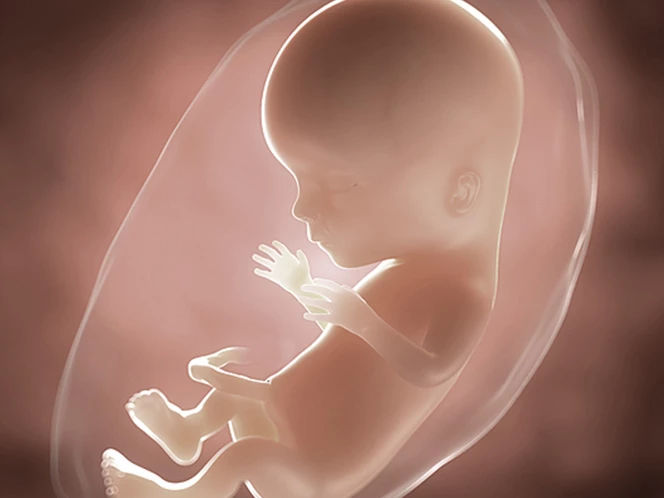
Your baby at 15 weeks is now about the size of an apple, measuring around 10.1cm in size1. Along with more lanugo (the fine, downy hair that covers their body to keep them warm), your baby’s facial features continue to develop, and they’ve started growing eyebrows and eyelashes on their tiny eyes1.

Join Aptaclub for a chance to win a £100 John Lewis voucher, plus expert feeding advice, expert parenting tools, helpful checklists and the latest deals straight to your inbox.
By registering you're confirming you agree with our T&Cs and Privacy Policy. You can opt out anytime.
Pregnancy at 15 weeks: what’s happening in my body?
As you reach 15 weeks of pregnancy, you might now be able to see your baby bump starting to develop. If your clothes are starting to feel a little tight, it might be time to start thinking about maternity wear, and getting a well-fitted bra will provide your growing breasts with the support they need.
At this point in your pregnancy, you might be experiencing what some women call a second-trimester ‘pregnancy glow’. Your skin might feel plumper and your hair thicker and shinier. However, remember that all pregnancies are different, so if you’re not feeling quite your best, take every opportunity to rest and take care of yourself.
15 weeks pregnant: signs and symptoms
For some women, at 15 weeks pregnant, the symptoms they experienced in the early weeks of pregnancy have started to subside or calmed down completely. But that’s not the case for everyone, so let’s explore some of the symptoms that you might still be experiencing.
Itchy skin
It’s common for your skin to feel itchy as your changing pregnancy hormones increase. Itching can also be the result of your skin starting to stretch around your growing baby bump5. You can help to ease the symptoms by5:
- Wearing loose clothing in breathable materials such as cotton
- Having a cool bath
- Frequently applying moisturiser
- Using perfume-free lotions and soaps
Most itchy skin is a normal part of pregnancy and won’t cause any harm to you or your baby. Occasionally, itching can be a sign of something more serious called intrahepatic cholestasis of pregnancy (ICP), a condition affecting your liver that will need to be monitored throughout your pregnancy. ICP usually develops from 28 weeks, but it can sometimes cause symptoms in early pregnancy5. If you notice that your itching is worse at night or more pronounced on the palms of your hands and soles of your feet, call your doctor or midwife.
Round ligament pain
If you notice a sharp jabbing around your lower abdomen or groin area, this could be something known as round ligament pain.
Round ligaments are the cords of tissue that connect your uterus to your pelvis, and the pain is caused by these being stretched as your baby gets bigger. Pregnancy hormones also have a part to play too6.
Lots of women experience round ligament pain in pregnancy, especially after 12 weeks, and while it isn’t harmful, it can be a little annoying - not to mention painful. Here are a few things you can try to ease any discomfort6:
- When you rest and sleep, try to lay on your side with a pillow between your legs.
- Keep yourself hydrated.
- Have a warm bath.
- When you stand up or change positions, do so slowly.
- Give pregnancy yoga or Pilates a try.
- Lean forward and support your bump when you sneeze or cough.
If you’re still in pain, or if you experience any severe or persistent abdominal pain, speak to your doctor or midwife.
An increase in vaginal discharge
The increase in blood flow around your pelvic area during pregnancy can lead to increased vaginal discharge. This milky fluid, called leucorrhoea, protects you and your baby by keeping your vagina clean and preventing infections from travelling up to your cervix1.
This is perfectly normal, but you should always speak to your doctor or midwife if your discharge changes colour or texture or has an unpleasant smell. You should also seek medical advice if your vagina becomes sore or itchy, you experience any pain when you go for a wee, or if you experience any vaginal bleeding1.
Thrush
Pregnancy hormones can mean that you’re more likely to develop thrush, a vaginal yeast infection. Symptoms of thrush include7:
- Itchiness or irritation around your vulva and vagina.
- Discharge that has the consistency of cottage cheese (it doesn’t usually smell).
- Soreness or stinging when you go for a wee.
If you think you could have thrush, speak to your doctor or midwife, who’ll be able to give you treatment options that are safe to use while you’re pregnant.
Coping with ‘baby brain’
Whilst it's not a medically proven condition, many pregnant women are familiar with the term ‘baby brain’. So, if you notice that you’re being a little more forgetful and struggling to think clearly or stay organised, you’re certainly not alone8.
There’s no real explanation behind why pregnant women experience baby brain, but fluctuating hormones, a lack of sleep, and anxiety around planning for your little one making an appearance could all play a part9.
If you’re looking to banish your baby brain, here are a few top tips from us:
- Embrace rest and sleep when you can. Try putting a routine in place that helps you to relax before bed. A warm bath, low lights, and no screen time can all help.
- Ask for help. Pregnancy can be overwhelming at times, so don’t be afraid to lean on those around you for help.
- Write a list. Whether it’s of things you need to do the next day or things you need to buy, writing things down can help you to stay on top of things.
Your health and wellbeing at 15 weeks pregnant
During your pregnancy, it can feel as though all your focus goes on your baby, but it’s important to look after you and your health too. Below you’ll find our advice for doing just that.
Dental care: looking after your teeth
The hormonal changes during pregnancy can leave your teeth and gums more susceptible to plaque, which can lead to swollen and bleeding gums10.
Good oral hygiene is really important during pregnancy, so make sure that you10:
- Clean your teeth twice a day, brushing for at least 2 minutes.
- Floss every day. This will help to remove any trapped food from between your teeth.
- Limit your intake of sweets, sugary foods, and soft drinks - stick to a healthy and balanced diet.
- Have regular dental check ups.
- If you’re struggling with morning sickness, rinse your mouth with water to clean it.
Your dental treatment is free during pregnancy and for the first year after your baby is born. You’ll need a maternity exemption certificate and your midwife will discuss this with you during your antenatal appointments.
Pelvic floor exercises
If you haven’t already, now is a good time to start doing your pelvic floor exercises. Pelvic floor exercises help to tone your pelvic floor muscles, which can help prevent you leaking urine if you sneeze or cough.
To do them, imagine that you’re having a wee and stopping mid-flow - keep practicing and you’ll soon get the hang of it.
Need more guidance on pelvic floor exercises?
Top tips for a healthy pregnancy diet
Follow our top nutrition tips for a healthy pregnancy diet:
- Eat a varied and balanced diet with plenty of fruit and vegetables.
- Be aware of the foods you should avoid in pregnancy . These include raw and undercooked meat, unpasteurised milk and dairy products, and liver and any foods high in vitamin A11.
- Avoid eating for 2! Whilst you might be more hungry during your pregnancy, you don’t need any extra calories until you reach your third trimester. Even then, you’ll only need an additional 200 calories a day12.
- Cut down on salt and limit foods that are high in sugar and saturated fats.
- Stay hydrated.
Focus on: hydration
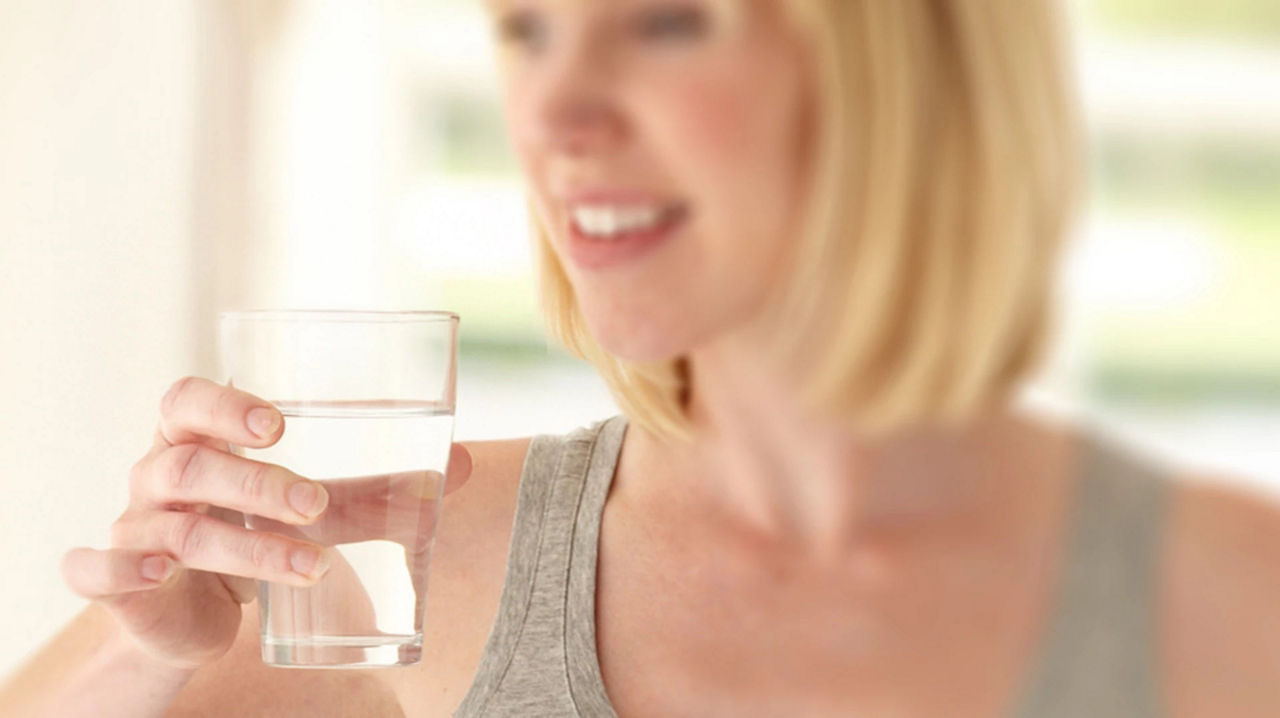
Staying hydrated is really important for you and your baby, and an overall healthy pregnancy. Drinking enough water is essential, but you can also stay hydrated with drinks like fruit juice, sugar-free squash, and sparkling water13.
You can drink tea and coffee in small amounts while you’re pregnant, but you shouldn’t have more than 200mg of caffeine per day. That’s around two mugs of instant coffee or two mugs of tea and a can of cola13. To stay on the safe side, you could switch to decaf tea and coffee while pregnant. Watch out for soft drinks and chocolate, which can also contain caffeine.
The science behind: hydration (powered by Nutricia)
Around 60% of the human body is water, and we naturally lose two litres a day. Water keeps our complex systems working properly, while helping us absorb nutrients and flush out toxins14. During pregnancy, increased demands on your body mean you’ll need more water than usual to avoid becoming dehydrated15.
The European Food Safety Authority recommends women drink around 2 litres of water daily, with an extra 300ml each day during pregnancy16. That’s about 9–10 250ml drinks each day. Try to avoid fizzy drinks and drinks high in sugar. With little nutritional value, it’s best to seek a healthier alternative15. Fruit juice can be high in sugar, but as long as it’s pure fruit, one 150ml glass can also count as part of your daily 5-a-day fruit and vegetable intake17.
- NHS Better Start in Life. Week 15 [online]. Available at https://www.nhs.uk/start-for-life/pregnancy/week-by-week-guide-to-pregnancy/2nd-trimester/week-15/#whats-happening. [Accessed September 2025]
- NHS 111 Wales. Pregnancy guide [online 2023]. Available athttps://111.wales.nhs.uk/doityourself/pregnancy/13to16weeks/. [Accessed September 2025]
- NHS Inform. How your baby develops week to week [online 2025]. Available at https://www.nhsinform.scot/ready-steady-baby/pregnancy/your-baby-s-development/how-your-baby-develops-week-to-week/#week-9-to-16. Accessed September 2025.
- HSE. Stages of pregnancy: 13 to 16 weeks pregnant [online 2022]. Available at https://www2.hse.ie/pregnancy-birth/baby-development-pregnancy-stages/stages/13-16-weeks/. [Accessed September 2025]
- NHS. Itching and intrahepatic cholestasis of pregnancy [online 2023]. Available at https://www.nhs.uk/pregnancy/related-conditions/complications/itching-and-intrahepatic-cholestasis/. [Accessed September 2025]
- NHS Royal Berkshire NHS Foundation Trust. Round ligament pain in pregnancy [online 2021]. Available at https://www.royalberkshire.nhs.uk/media/1l5dy01i/physio-round-ligament-pain-in-pregnancy.pdf. [Accessed September 2025]
- NHS. Thrush [online 2024]. Available at https://www.nhs.uk/pregnancy/related-conditions/common-symptoms/thrush/. [Accessed September 2025]
- NHS Better Start in Life. Week 26 [online]. Available at https://www.nhs.uk/start-for-life/pregnancy/week-by-week-guide-to-pregnancy/2nd-trimester/week-26/#:~:text='Baby%20brain'&text=This%20is%20not%20a%20medical,a%20lot%20on%20your%20mind. [Accessed September 2025]
- NHS Derbyshire Family Health Service. Baby brain [online]. Available at https://derbyshirefamilyhealthservice.nhs.uk/our-services/pregnancy/getting-ready/baby-brain. [Accessed September 2025]
- NHS. Bleeding gums in pregnancy [online 2022]. Available at https://www.nhs.uk/pregnancy/common-symptoms/bleeding-gums/. [Accessed March 2026]
- NHS. Foods to avoid in pregnancy [online 2023]. Available at https://www.nhs.uk/pregnancy/keeping-well/foods-to-avoid/. [Accessed September 2025]
- NHS Best Start in Life. Healthy eating in pregnancy [online]. Available at https://www.nhs.uk/start-for-life/pregnancy/healthy-eating-in-pregnancy/#should-i-eat-for-two-during-pregnancy. [Accessed September 2025]
- NHS Inform. Eating well in pregnancy [online 2025]. Available at https://www.nhsinform.scot/ready-steady-baby/pregnancy/looking-after-yourself-and-your-baby/eating-well-in-pregnancy/ [Accessed September 2025]
- Shrewsbury & Telford Hospital NHS Trust (2020). The importance of hydration [online]. Available at https://www.sath.nhs.uk/wp-content/uploads/2020/12/The-Importance-of-Hydration-Article.pdf. [Accessed September 2025]
- NHS. Water, drinks and hydration [online 2023]. Available at https://www.nhs.uk/Live-well/eat-well/food-guidelines-and-food-labels/water-drinks-nutrition/ [Accessed September 2025]
- European Food Safety Authority. Scientific Opinion on Dietary Reference Values for water. EFSA Journal 2010;8(3)1459:48.
- NHS. 5 a day: what counts? [online 2022] Available at https://www.nhs.uk/live-well/eat-well/5-a-day/5-a-day-what-counts/ [Accessed September 2025]
Last reviewed: September 2025

related articles