Your increasingly curious 2-month-old baby will be taking more of an interest in their surroundings and may spend less time sleeping. They might also start to utter their first recognisable sounds in preparation for speech later on, making this an exciting time in their development.
Your baby’s development at 2 month old
Gripping stuff
Favourite sounds and strengthening muscles

What’s been happening over the last 4 weeks?
Now that your 2-month-old baby recognises your voice and your partner’s, they will take great comfort in hearing it. In fact, it will probably be their favourite sound. As their personality starts to emerge, you will get an understanding of their likes and dislikes. And you may notice that they need less sleep and are awake for a little longer each day.
Physical development at 2 months old
Babies develop physically from head to toe: first by strengthening their neck muscles to support their head, followed by their shoulders, chest and lower back. The legs are the last to develop. Your baby’s body is continuing to straighten out, which means less trapped wind. And if they are not yet lifting their head briefly when lying flat on their tummy, they soon will be.
As their muscles become more reactive, they may move their arms when they are excited.

Join Aptaclub for a chance to win a £100 John Lewis voucher, plus expert feeding advice, expert parenting tools, helpful checklists and the latest deals straight to your inbox.
By registering you're confirming you agree with our T&Cs and Privacy Policy. You can opt out anytime.
Grasping and clutching objects
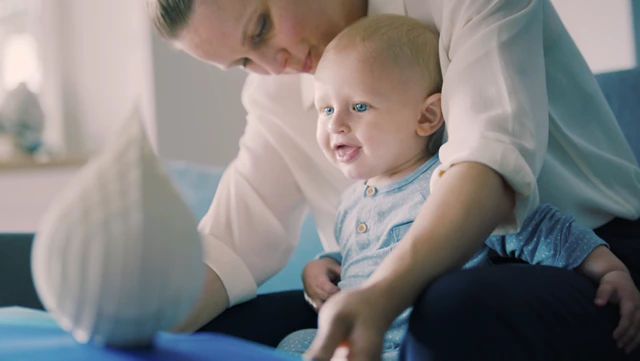
As your 2-month-old baby discovers their own hands, their instinctive grasp reflex lessens. This allows them to explore different objects, using a wider range of movement. They are likely to be fascinated by anything new, so encourage their hand–eye coordination with a variety of baby-safe objects they can get to grips with.
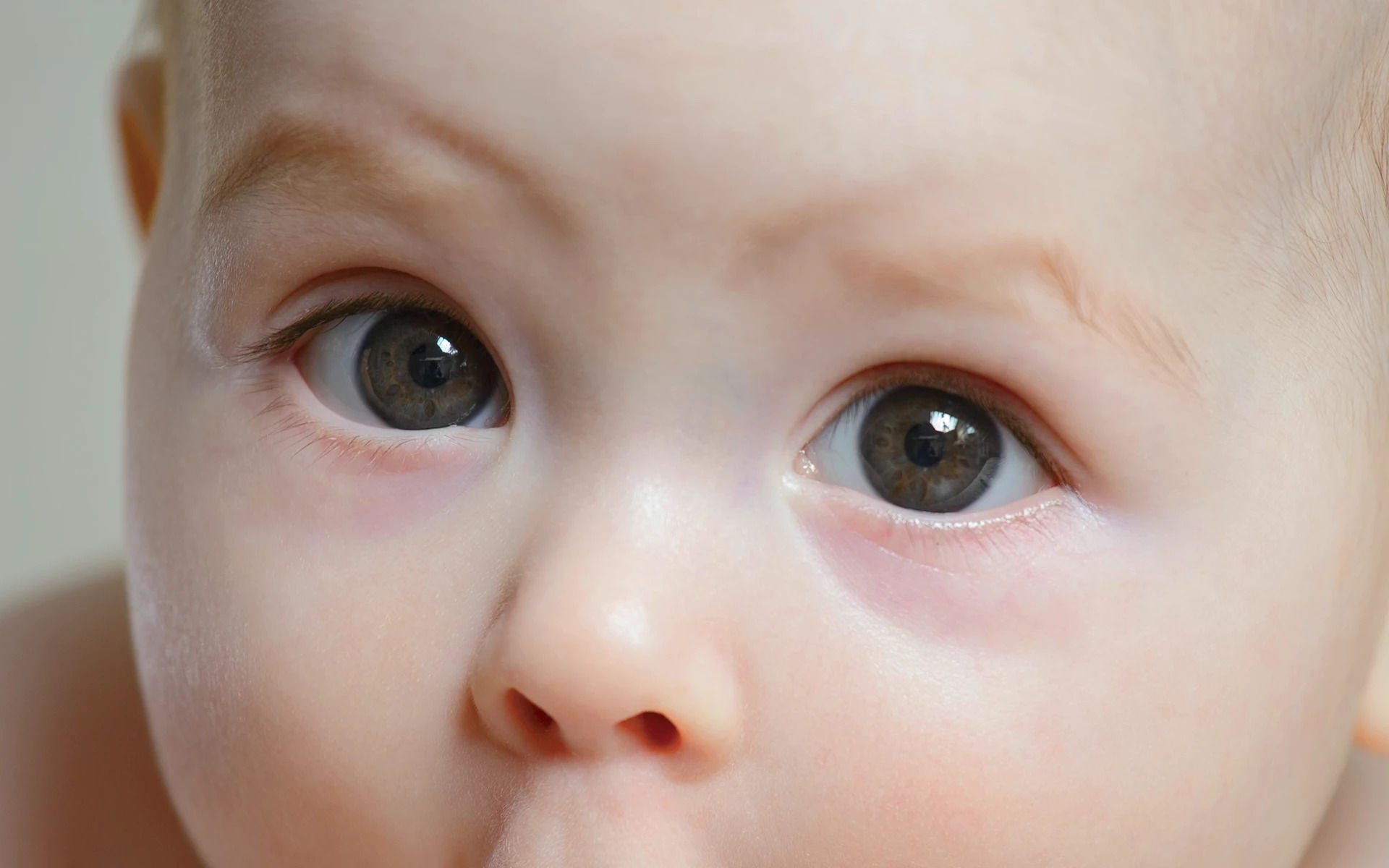 Your baby’s eyesight is still developing, but they may now be able to focus on nearby objects
Your baby’s developing eyesight
At 2 months old, your baby’s eyesight is still developing. However, some babies may now be able to focus their eyes on nearby objects. While many babies prefer bold patterns and primary colours at this age, the difference between shades is becoming easier for them to distinguish.
Learning to communicate
Your baby doesn’t need to form words in order to communicate; simple noises, gurgles and coos in response to your voice come instinctively, and in time, you will know what they mean. Your baby may even turn his head towards your voice as you are speaking.
The comfort of mum
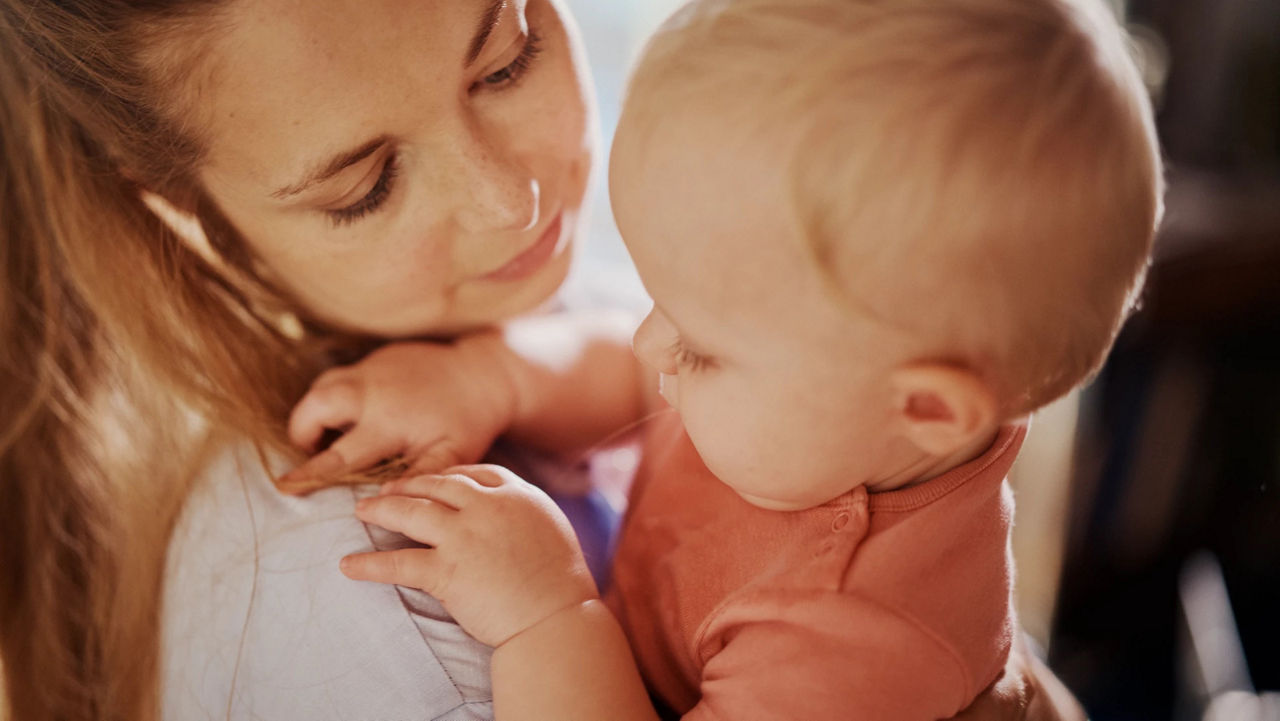
Your baby now feels comforted by your touch and soothed when you or your partner holds them. Don’t worry about your two-month-old getting overly dependant on cuddles – hold and comfort them whenever they need it. However, a cuddle from someone unfamiliar may cause tears. Many babies also start to comfort themselves by sucking their fingers or thumb or by using a dummy.
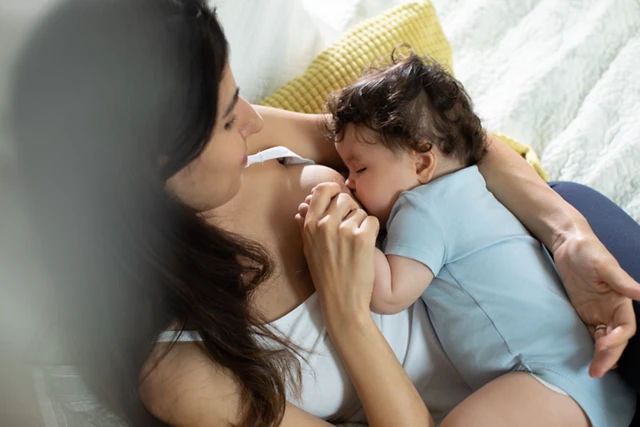
Your baby’s tummy is very small but it can easily digest your breast milk.
Feeding their development
Night feeds continue to play an important role in your 2-month-old baby’s development. They provide the nutrition needed for growth, while enabling your body to produce prolactin, the hormone that maintains your milk supply1.
You may find your baby begins to feed for longer but less frequently. They may also require more feeds during the day than at night or vice versa – either is normal, so follow their lead. Your supply of breast milk will naturally adapt to their demands.
Coping with colic
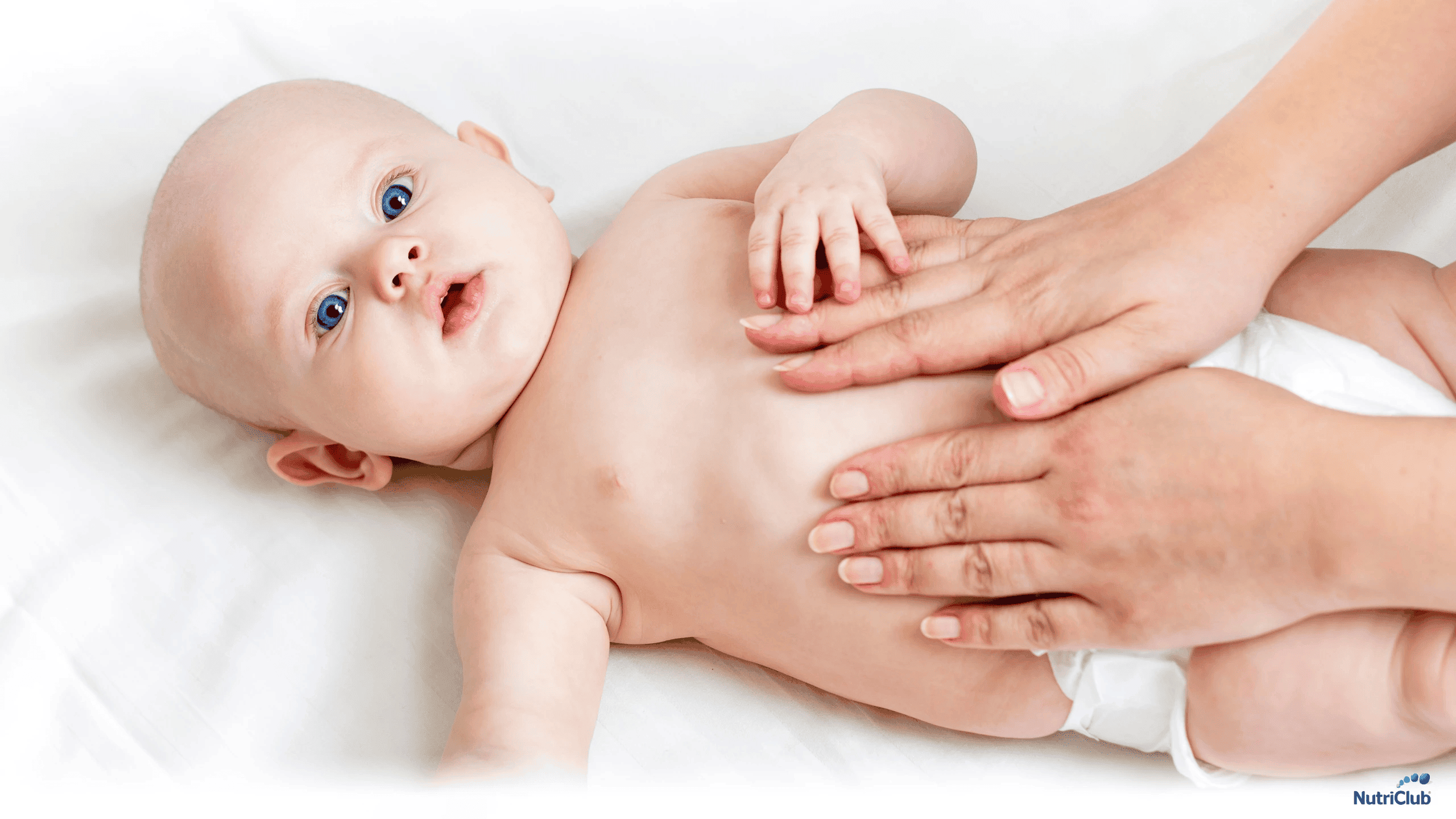
Colic is a common feeding problem at this age. Unfortunately, the cause is unknown but it may be due to swallowing excess air during feeds, which can lead to trapped wind. Or an immature digestive system which has difficulty digesting milk. The symptoms, such as excessive crying for two–three hours at a time and bringing the knees up to the chest, can be distressing for both mum and baby. Learn more about soothing colic in babies.
related articles
Learn more about your baby




- NHS UK. Breastfeeding: The first few days [Online]. Available at: www.nhs.uk/Conditions/pregnancy-and-baby/pages/breastfeeding-first-days.aspx [Accessed April 2014]
Last reviewed: 13th August 2014
Reviewed by Nutricia’s Medical and Scientific Affairs Team