Early signs of labour

If you’re keenly awaiting signs of your baby’s imminent arrival, you may be surprised to learn that many women don’t realize they’re in labour straight away. Believe it or not, it can be hard to determine if you’re really in labour during the early stages, or whether it’s a false alarm.

Read on to learn more about the common signs of early labourhow long early labour lasts and what to do if you think you’re in labour.
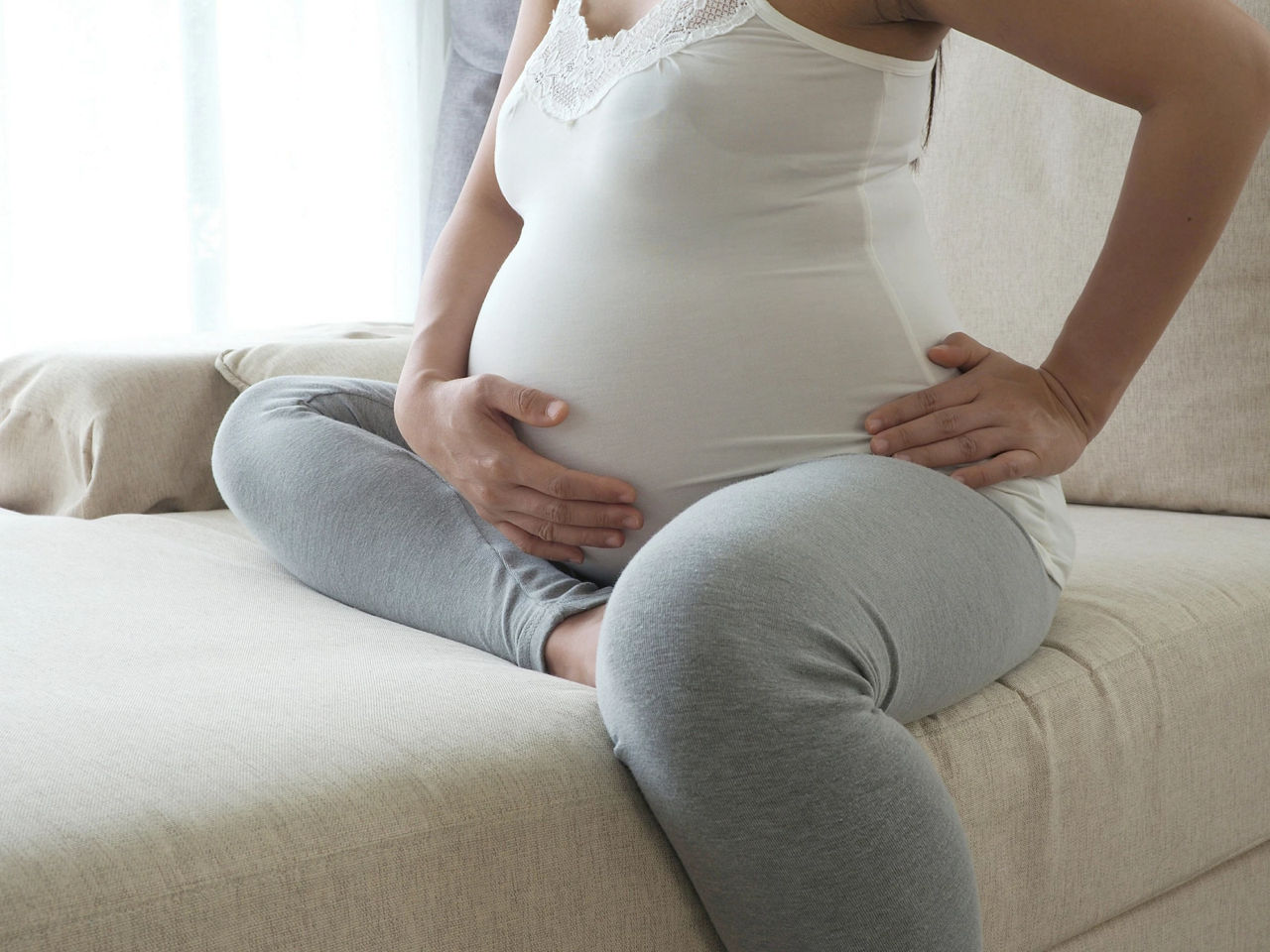
pregnant-woman-feeling-sick-siting-in-livingroom

What are the early signs of labour?

This is when the muscles in your womb tighten and then relax to move your baby down the birth canal. In early labour contractions can be quite short and far apart, but as your labour progresses they’ll get progressively longer, more frequent and more intense.

You should call your midwife once they last at least 60 seconds and are 5 minutes apart.

This is a pink, jelly-like plug of mucus which is released from your cervix when it begins to open (dilate) in preparation for birth, and may pass out of your vagina.

This can be caused by the weight of your baby pressing down on your bowels. Some women also experience diarrhoea as their body prepares for labour and birth

This often feels like the heavy, aching sensation you may feel during your period. This may be a sign of your muscles and joints stretching and shifting in preparation for birth. It may also be a sign that your baby’s head has moved down into your pelvis and ‘engaged’ in a good position for birth.

This is when the amniotic sac that your baby develops in breaks and the amniotic fluid drains out. It may come as a slow trickle, or it may come as a sudden gush that you can’t control.

You should call your midwife to let them know your waters have broken because without amniotic fluid, there’s an increased risk of infection for your baby. Most women go into labour within 24 hours of their waters breaking, but if you don’t you’ll be offered an induction to try and get things moving.

information-icon

You should call your midwife unit immediately if you experience any of the following:

 
  • Your waters break
  • You’re bleeding
  • Your baby isn’t moving as often as usual
  • You think you may be in labour and you’re less than 37 weeks pregnant

What happens during the early stages of labour?

During the early phase of labour, contractions begin as your cervix begins to soften and thin, and gradually starts to open up (dilate) for your baby to be born.

How long does early labour last?

This is usually the longest stage of labour. It can take hours or in some cases days before you’re in established or ‘active’ labour and are having regular contractions.

Favourites_Cards

Join Aptaclub for a chance to win a £100 John Lewis voucher, plus expert feeding advice, expert parenting tools, helpful checklists and the latest deals straight to your inbox.

Your email will be used to create your account and to recognise you when you contact us. We may also use your email to match data for research purposes.
Loading....
This field is required Please retype or use an alternative email address with a minimum of two letters, containing an @ symbol i.e. email@email.co.uk Your email has been verified. You can now register Please verify your email before submitting. Name validation https://bpi.briteverify.com/api/public/v1/fullverify 2b465552-a427-4a22-b5a8-aaba7770bf1d
Your password must be a minimum of 8 characters, with at least 1 letter, 1 number and 1 special character.
This field is required Please ensure your passwords match and contain a minimum of 8 characters, with at least 1 letter, 1 number and 1 special character.
Cow & Gate products excluding first infant milks and food for special medical purposes.
Please tick this box
Before we send you advice and information on infant feeding (for babies below 6 months), we're required to ask for your consent.

It looks as though you already have an account with us via [Aptaclub/C&G Babyclub] – please try your password for that account to login, or click 'forgot my password' to reset.

Please correct the errors in the form

By registering you're confirming you agree with our T&Cs and Privacy Policy. You can opt out anytime.

bump-massage-hello-in-there

What should I do if I think I'm in labour?

The first thing to do is relax. Staying calm will enable your body to release oxytocin more easily – the hormone that helps you to cope with labour and helps your labour to progress.

Your midwife has probably told you there’s no need to contact them until you’re having regular contractions that are lasting 60 seconds and are 5 minutes apart1. But of course, there’s no harm in calling them if you have any concerns or need some extra reassurance.

You should also call your midwife if:

  • Your waters break
  • You’re bleeding
  • You notice your baby isn’t moving as often as usual
night-icon

If your labour starts at night
it’s a good idea to rest and try and get some sleep if you can so you can conserve some energy for when you’re in established labour.

sun-icon-1

If your labour starts during the day
staying upright and active can help things progress.

Tuning into your breathing, having a warm bath or shower or even some gentle massage are all good ways to help you stay relaxed and help ease any pain. Now’s a good time to start using your TENS machine if you have one in order to feel maximum benefit from it2. It’s also safe to take some paracetamol to ease any aches and pains1.

It's also important to try to eat and drink, if you can, so that you have more energy when in active labour. Try some of our recommended snacks and foods for labour. It’s important to listen to your body and only eat if you feel like it – if you’re feeling nauseous, food’s probably best avoided.

mom and baby

Need some help?

You can get quick answers to common questions in our FAQs.

Alternatively, if you need help with general pregnancy or baby advice, or maybe on using or ordering our products - our expert team are always on hand to talk about feeding your baby. 


  1. NHS. Signs that labour has begun. [Online]. 2017. Available at: https://www.nhs.uk/conditions/pregnancy-and-baby/labour-signs-what-happens/ [Accessed April 2020]
  2. NHS. Pain relief in labour. [Online]. 2020. Available at: https://www.nhs.uk/conditions/pregnancy-and-baby/pain-relief-labour/ [Accessed April 2020]

Share this article

Favourites_Cards

Join Aptaclub for a chance to win a £100 John Lewis voucher, plus expert feeding advice, expert parenting tools, helpful checklists and the latest deals straight to your inbox.

Your email will be used to create your account and to recognise you when you contact us. We may also use your email to match data for research purposes.
Loading....
This field is required Please retype or use an alternative email address with a minimum of two letters, containing an @ symbol i.e. email@email.co.uk Your email has been verified. You can now register Please verify your email before submitting. Name validation https://bpi.briteverify.com/api/public/v1/fullverify 2b465552-a427-4a22-b5a8-aaba7770bf1d
Your password must be a minimum of 8 characters, with at least 1 letter, 1 number and 1 special character.
This field is required Please ensure your passwords match and contain a minimum of 8 characters, with at least 1 letter, 1 number and 1 special character.
Cow & Gate products excluding first infant milks and food for special medical purposes.
Please tick this box
Before we send you advice and information on infant feeding (for babies below 6 months), we're required to ask for your consent.

It looks as though you already have an account with us via [Aptaclub/C&G Babyclub] – please try your password for that account to login, or click 'forgot my password' to reset.

Please correct the errors in the form

By registering you're confirming you agree with our T&Cs and Privacy Policy. You can opt out anytime.

x