


Our range of Aptamil products are also available in many retailers both online and instore - you can find your nearest store by clicking below.


Aptamil® Follow On Milk Pre-Measured Tabs 24 sachets

6-12 Months

x24 sachets

tabs
Aptamil® Pre-Measured Tabs, follow on milk is available in compact tabs for ease and accuracy.
One tab = one scoop
No scoops, no mess
Easier to prepare than powdered formulations
Accurately measured feeds
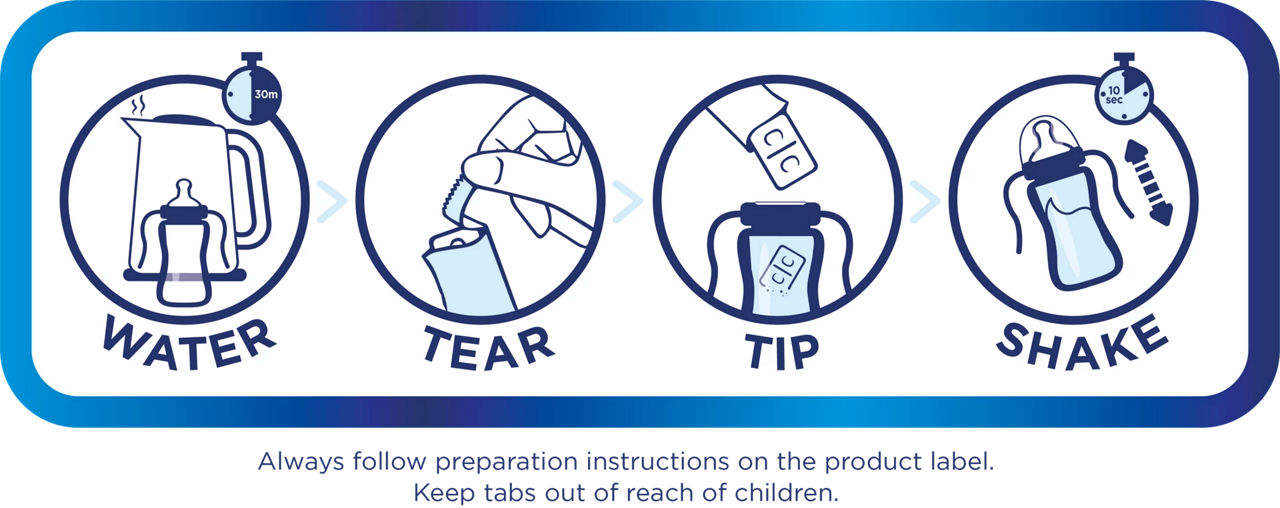
Just add to waterΔ
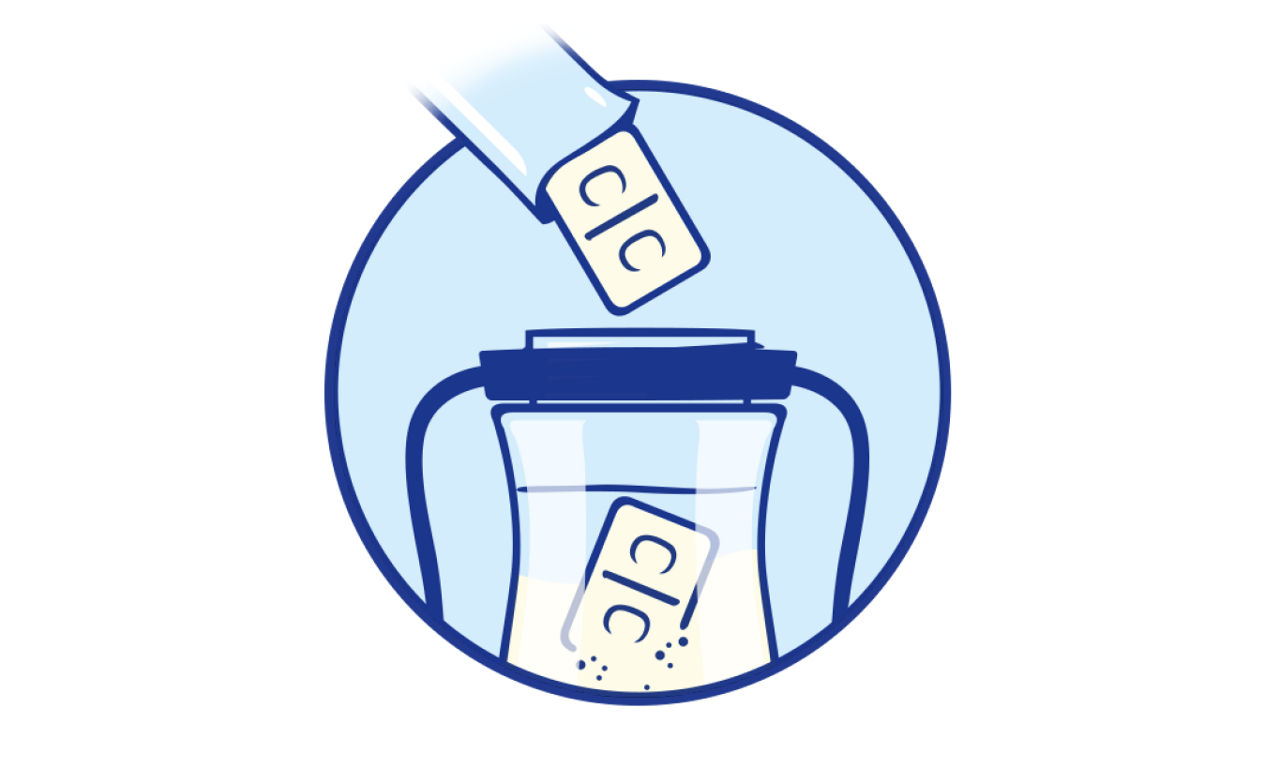
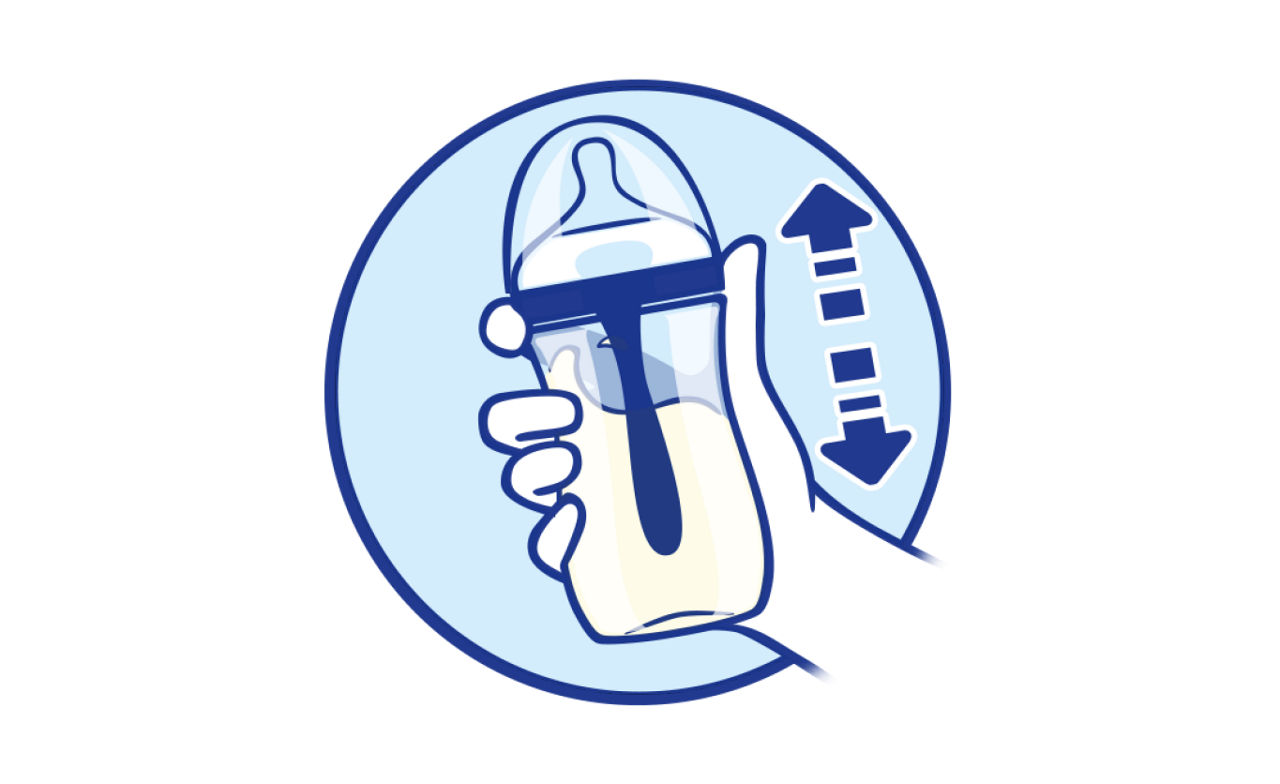
How to use Aptamil Tabs
Product information
Aptamil® Pre-Measured Tabs, follow on milk is available in compact tabs for ease and accuracy.
- One tab = one scoop
- No scoops, no mess
- Easier to prepare than powdered formulations
- Accurately measured feeds
- Just add to waterΔ
Lactose (from milk), Vegetable oils (High oleic sunflower oil, Coconut oil, Rapeseed oil, Sunflower oil), Skimmed milk, Demineralised whey (from milk), Galacto-oligosaccharides (GOS) (from milk), Whey concentrate (from milk), Milk protein, Calcium phosphate, Emulsifier (Sunflower lecithin), Fructo‐oligosaccharides (FOS), Fish oil, Potassium chloride, Sodium citrate, Choline chloride, Potassium citrate, Oil from Mortierella alpina, Magnesium chloride, Vitamin C, Magnesium hydrogen phosphate, Calcium carbonate, Inositol, L-Tryptophan, Ferrous sulphate, Zinc sulphate, L-Carnitine, Antioxidant (Vitamin C), Pantothenic acid, Nicotinamide, Vitamin E, Copper sulphate, Vitamin A, Riboflavin, Thiamin, Vitamin B6, Potassium iodide, Folic acid, Manganese sulphate, Sodium selenite, Vitamin K1, Vitamin D3, Biotin, Vitamin B12.
Allergy Advice: For allergens, see ingredients in bold.
- Typical values per 100ml prepared feed
- Energy
- 285kJ/68kcal
- Fat
- 3.2g
- of which, saturates
- 1.0g
- of which, mono-unsaturates
- 1.6g
- of which, polyunsaturates
- 0.5g
- of which, LCPs†
- 0.031g
- - Arachidonic acid (AA)
- 0.009g
- - Docosahexaenoic acid (DHA)
- 0.017g
- Carbohydrate
- 8.2g
- of which, sugars
- 8.1g
- of which, lactose
- 7.8g
- of which, polyols
- 0.006g
- - Inositol
- 0.006g
- Fibre
- 0.6g
- of which, GOS°
- 0.48g
- of which, FOS◊
- 0.08g
- Protein
- 1.4g
- Vitamins
- Vitamin A
- 59µg/15%*
- Vitamin D3
- 1.70µg/24%*
- Vitamin E
- 1.2mg TE/24%*
- Vitamin K1
- 4.1µg/34*
- Vitamin C
- 10mg/22%*
- Thiamin (B1)
- 0.05mg/10%*
- Riboflavin (B2)
- 0.14mg/20%*
- Niacin (B3)
- 0.45mg/6%*
- Vitamin B6
- 0.05mg/7%*
- Folate
- 14µg/11%*
- Vitamin B12
- 0.17µg/21%*
- Biotin
- 1.9µg/19%*
- Pantothenic acid
- 0.52mg/17%*
- Minerals
- Sodium
- 22.8mg/6%*
- Potassium
- 79mg/8%*
- Chloride
- 56mg/11%*
- Calcium
- 78mg/14%*
- Phosphorus
- 51mg/9%*
- Magnesium
- 7.3mg/9%*
- Iron
- 1.0mg/13%*
- Zinc
- 0.49mg/10%*
- Copper
- 0.055mg/11%*
- Manganese
- 0.006mg/<1%*
- Fluoride
- 0.001mg
- Selenium
- 3.0µg/15%*
- Iodine
- 13µg/16%*
- Others
- L-Carnitine
- 2.0mg
- Choline
- 15mg
- Non-caloric carbohydrate (GOS°)
- 0.2g
- Nucleotides
- 2.4mg
*% Reference Intake - a guide to the amount of vitamins and minerals needed per day for infants and young children
†Long-chain polyunsaturated fatty acids
°Galacto-oligosaccharides
◊Fructo-oligosaccharides
Because powdered milk tabs are not sterile, failure to follow instructions may make your baby ill.
Age indication:
Suitable from 6-12 months
Legal name:
Follow On Milk
Name and address:
Nutricia Ltd,
White Horse Business Park,
Trowbridge,
Wiltshire,
BA14 0XQ
Net weight:
576g (24x24g ℮)
FAQs
Follow-on milk isn't essential, but it's specially formulated to support your baby's changing nutritional needs from 6-12 months alongside the introduction of solid foods. Aptamil follow-on milk is designed to complement a weaning diet, backed by 50 years of pioneering breastmilk research.
Aptamil 1 is our First Infant Milk, which is nutritionally complete and suitable from birth as a breastmilk substitute.
Aptamil 2 Follow-On Milk is specifically designed for babies aged 6-12 months as part of a varied weaning diet. It is tailored to support their changing nutritional needs and contains vitamin D, which contributes to the normal function of the immune system.
You may choose to switch to follow-on milk from 6 months, as Aptamil follow-on milk is designed to support your baby’s nutritional needs from 6-12 months as part of a mixed diet. If you're unsure, our free Aptaclub careline is open 24/7 to help answer any questions you might have.
For babies aged 6-12 months, we recommend around 500-600ml (approx. 1 pint) per day, usually split across 3 to 5 feeds. As your baby begins eating more solid foods, their milk intake may naturally change - this is completely normal.
Vitamin D is an immuno-nutrient which helps support the normal function of your baby's developing immune system. Nutri-fibres are a blend of GOS (galacto-oligosaccharides) and FOS (fructo-oligosaccharides), which help feed the good bacteria in your baby’s gut. Aptamil follow-on milk contains more nutri-fibres than any other brand.
Some changes in the colour, consistency or smell of your baby's poo are completely normal when making the switch to follow-on milk. This is simply due to its different nutritional composition between first infant milk and follow-on milk, as both are adapted for different age stages. If you'd like to check and better understand your baby’s poo, try Poogle It! Poogle It! - Free AI Baby Poo Tracker Tool | Aptaclub UK - our free AI poo checker. Simply upload a photo of your baby's nappy for instant, science-backed analysis. Developed by our experts and trusted by parents in more than 40 countries, it's a quick and easy way to put your mind at rest.

Other products in this range
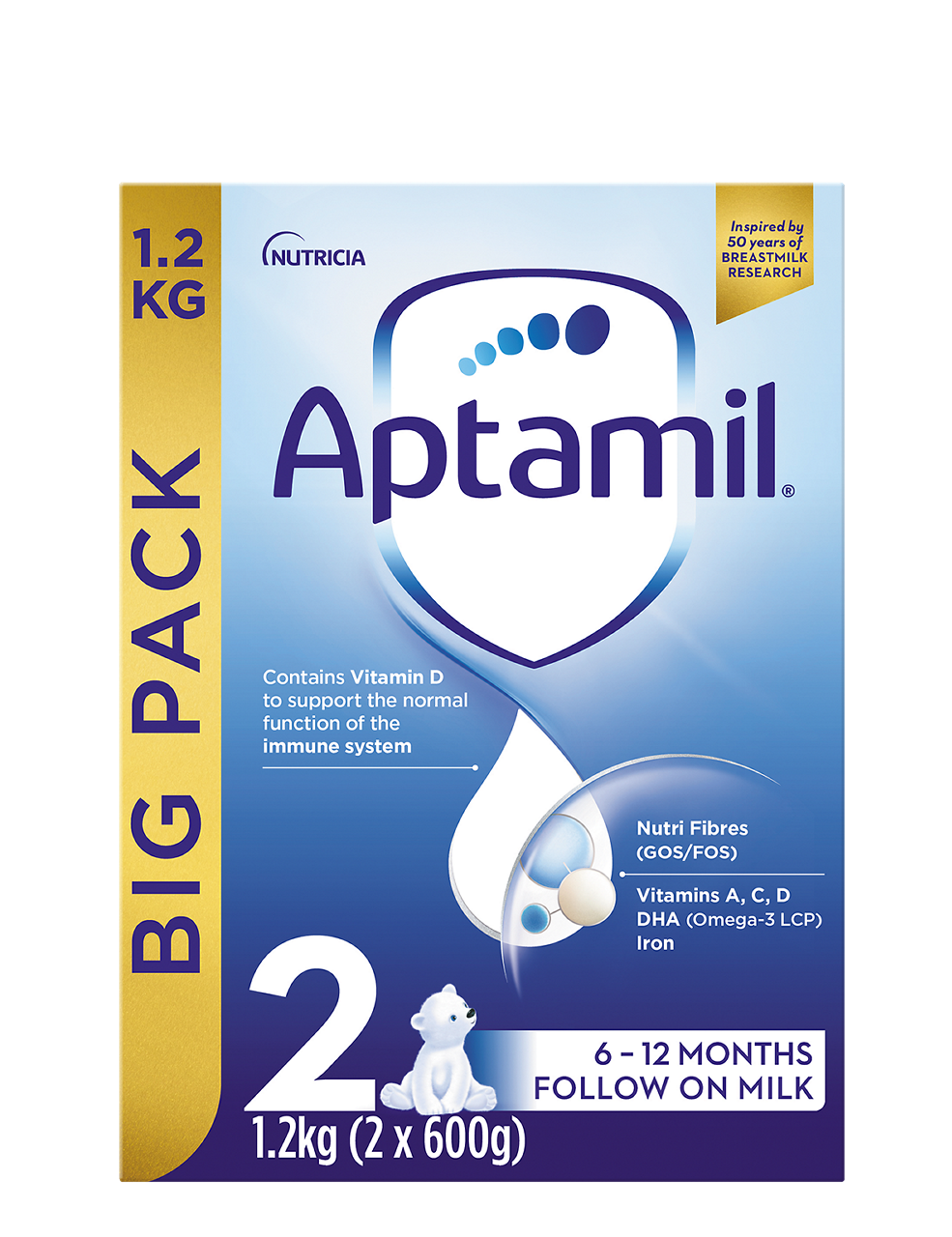
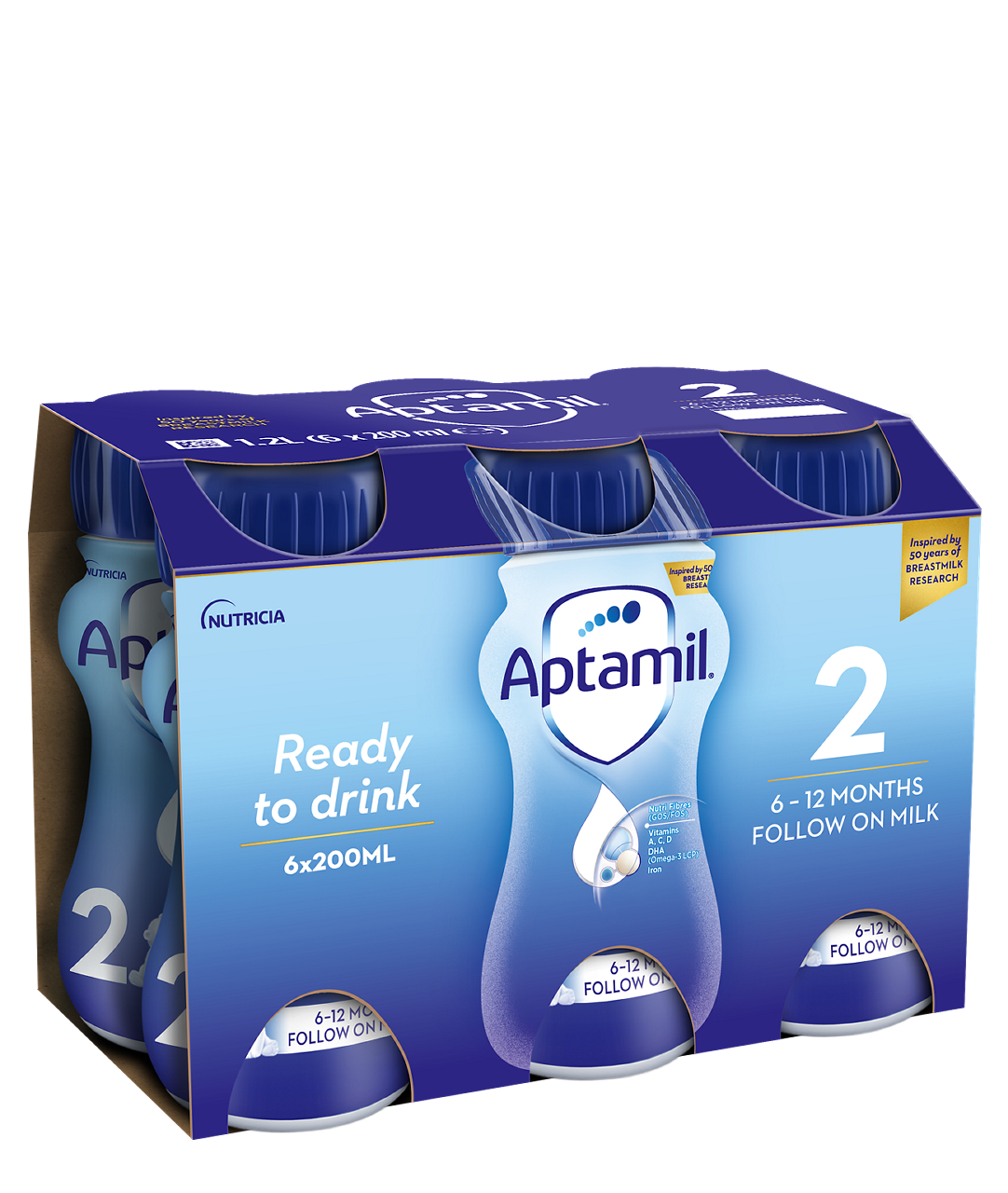
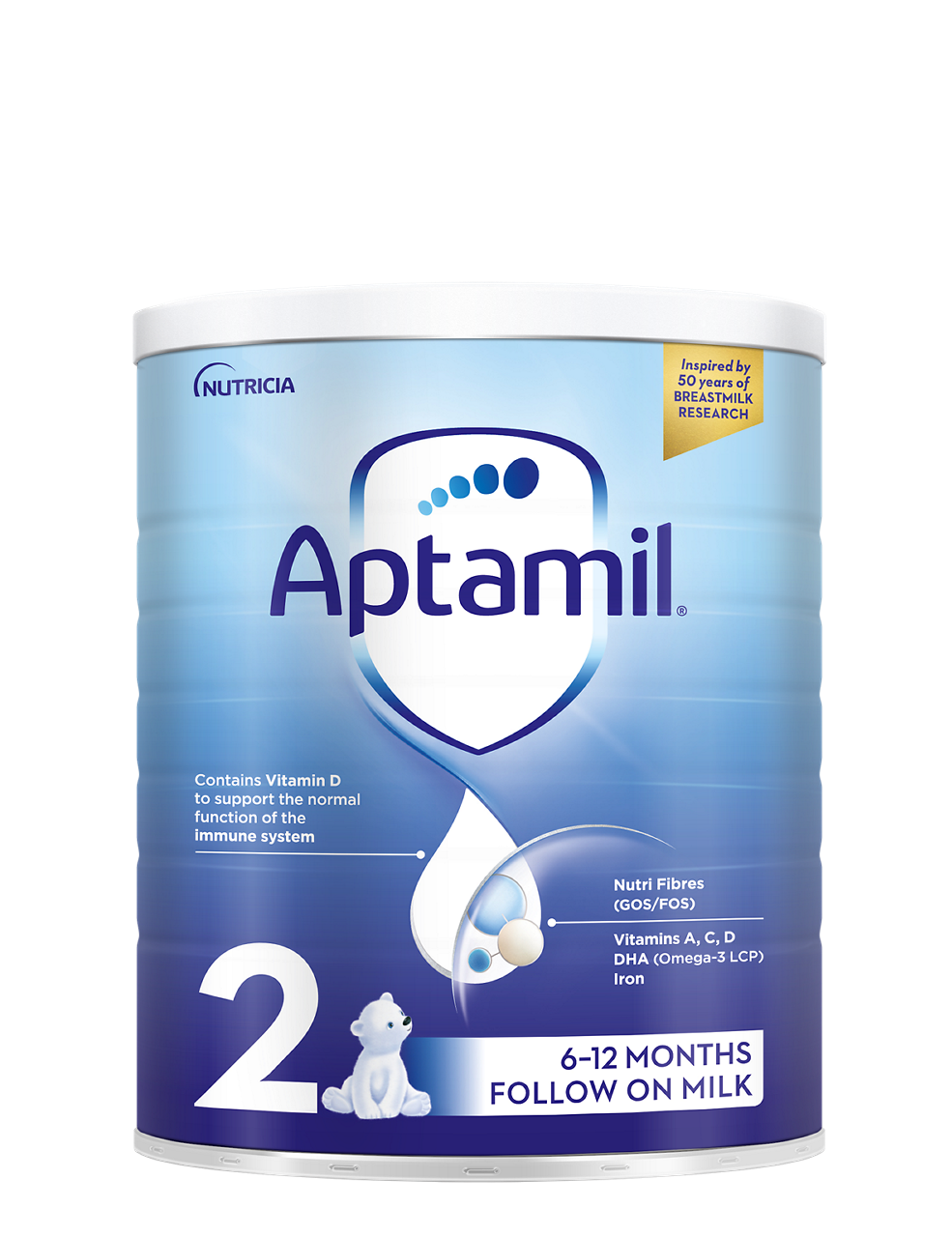
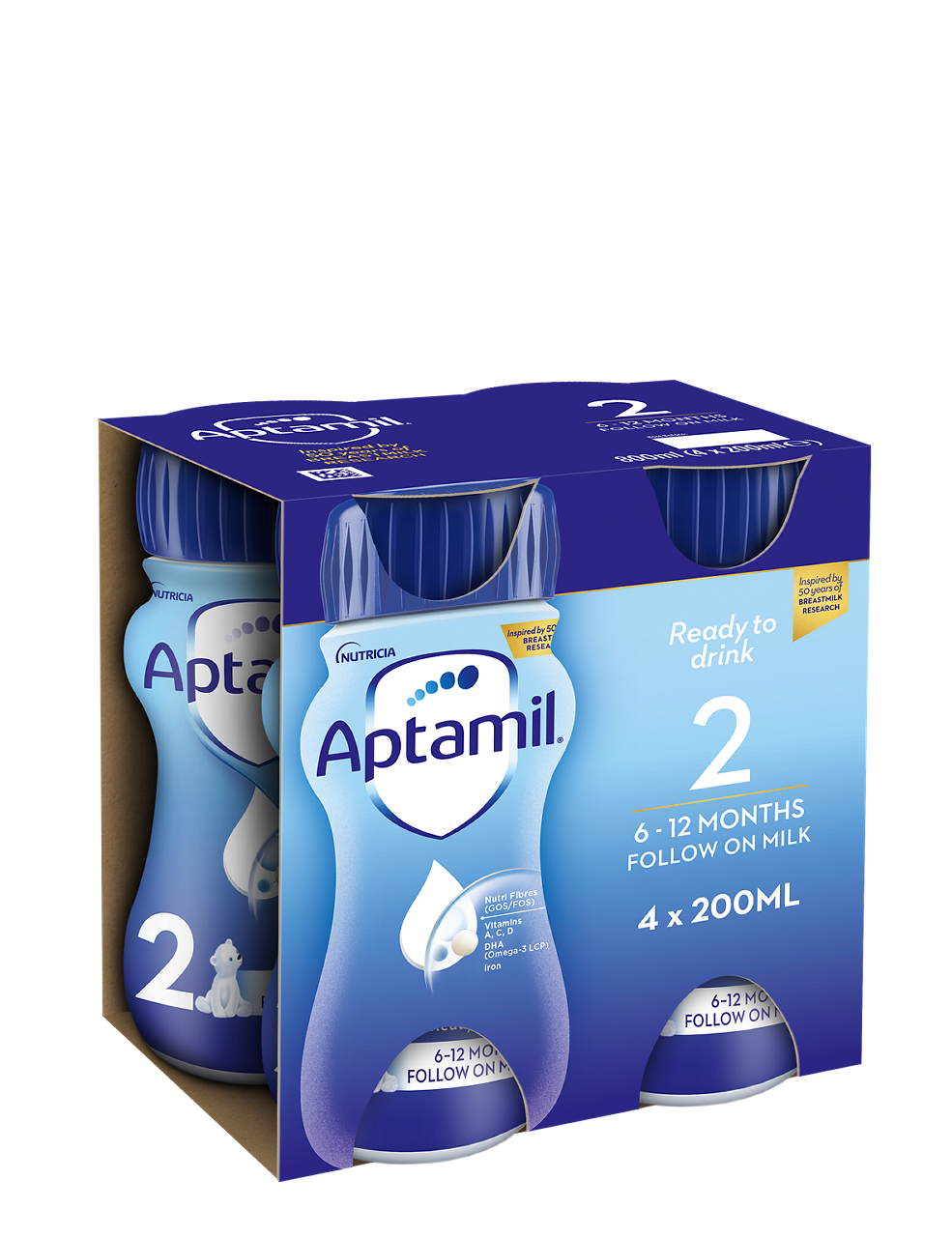
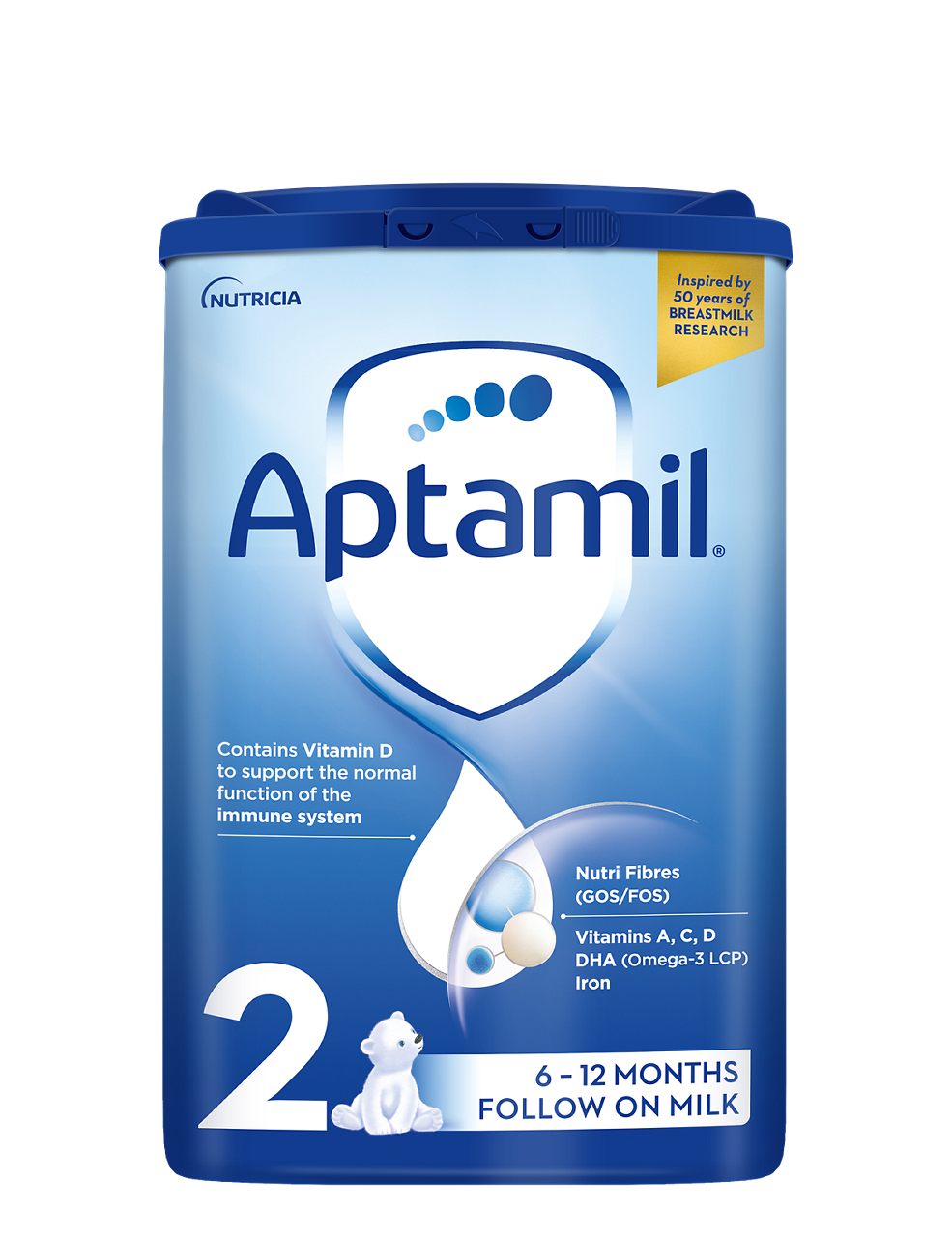
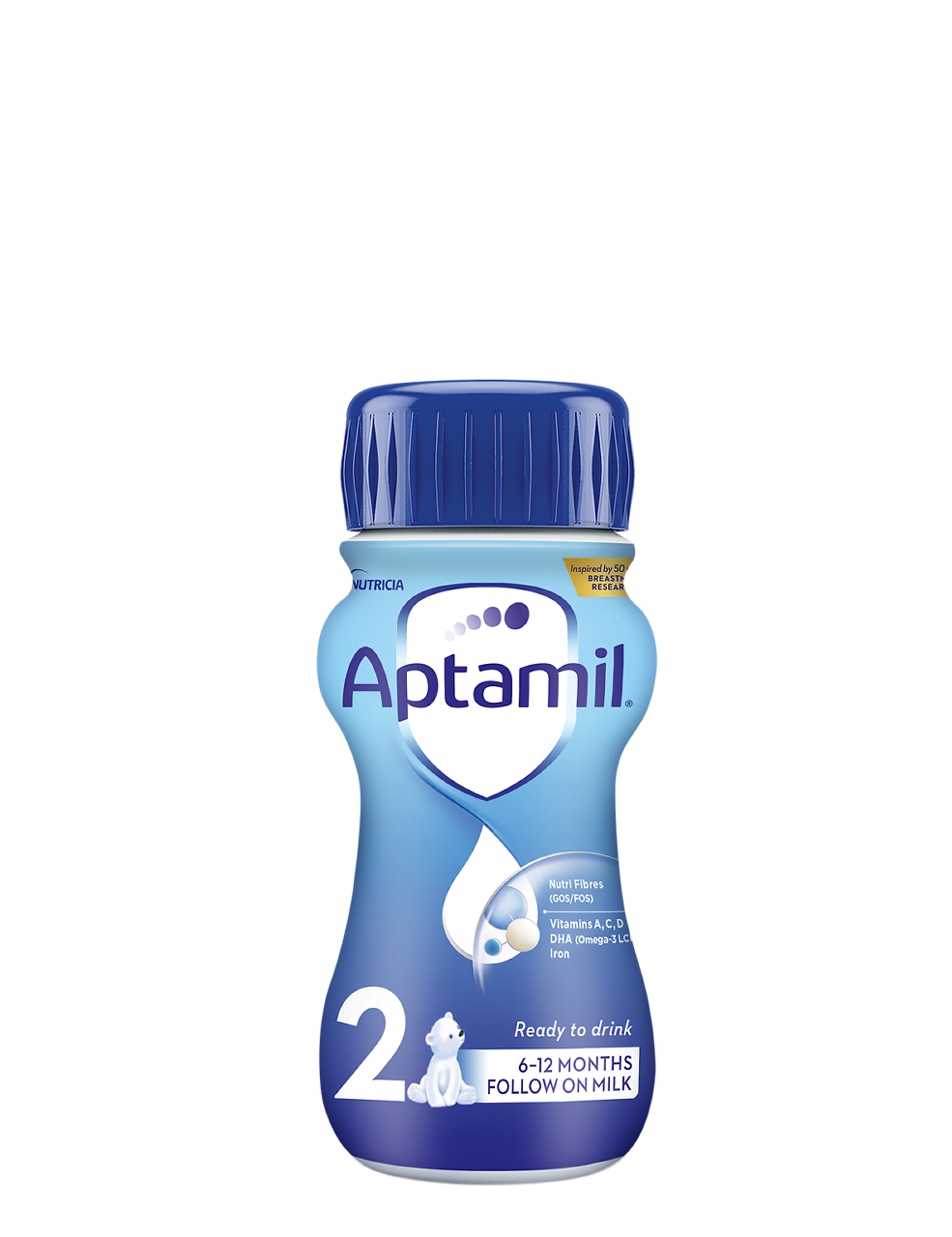

Our Follow On Milk is inspired by 50 years of breastmilk research and is specifically tailored to complement a weaning diet. It contains Vitamins A & C and Vitamin D to support the normal function of the immune system, as well as iron to support normal cognitive development.
Δfollowing preparation instructions

Important notice
Breastfeeding is best for babies. Infant formula is suitable from birth when babies are not breastfed. Follow-on milk is only for babies over 6 months, as part of a mixed diet and should not be used as a breastmilk substitute before 6 months. We advise that all formula milks including the decision to start weaning should be made on the advice of a doctor, midwife, health visitor, public health nurse, dietitian, pharmacist or other professional responsible for maternal and child care, based on baby’s individual needs.
Do not use if your baby has been diagnosed with a cow's milk allergy.
Use Toddler Milk as part of a varied balanced diet from 1 year.
*From a regulatory point of view, we’re unable to offer discounts on infant formula, comfort and anti-reflux products.