Home pregnancy tests

Read between the lines

When to test and what the results can mean

While headaches, nausea and a missed period can be signs of early pregnancy, the only way to confirm it is to take a home pregnancy test. Find out when and how to carry out the test for the most accurate result.
 

Am I pregnant?

Around six days after fertilisation, the cells that will become the placenta start producing a hormone called hCG (human chorionic gonadotrophin)1. After two weeks – probably around the time your period is due – the hCG levels should be high enough for a pregnancy test to detect it in your urine1.


When and how to take a test

The home pregnancy test you choose will have its own set of instructions, but many suggest doing it first thing in the morning – particularly if you’re testing early. If that’s not possible, try not to drink a lot beforehand as liquids may dilute your urine too much for an accurate result.

The tests are designed to detect raised hormone levels in your urine

Favourites_Cards

Join Aptaclub for a chance to win a £100 John Lewis voucher, plus expert feeding advice, expert parenting tools, helpful checklists and the latest deals straight to your inbox.

Your email will be used to create your account and to recognise you when you contact us. We may also use your email to match data for research purposes.
Loading....
This field is required Please retype or use an alternative email address with a minimum of two letters, containing an @ symbol i.e. email@email.co.uk Your email has been verified. You can now register Please verify your email before submitting. Name validation https://bpi.briteverify.com/api/public/v1/fullverify 2b465552-a427-4a22-b5a8-aaba7770bf1d
Your password must be a minimum of 8 characters, with at least 1 letter, 1 number and 1 special character.
This field is required Please ensure your passwords match and contain a minimum of 8 characters, with at least 1 letter, 1 number and 1 special character.
Cow & Gate products excluding first infant milks and food for special medical purposes.
Please tick this box
Before we send you advice and information on infant feeding (for babies below 6 months), we're required to ask for your consent.

It looks as though you already have an account with us via [Aptaclub/C&G Babyclub] – please try your password for that account to login, or click 'forgot my password' to reset.

Please correct the errors in the form

By registering you're confirming you agree with our T&Cs and Privacy Policy. You can opt out anytime.

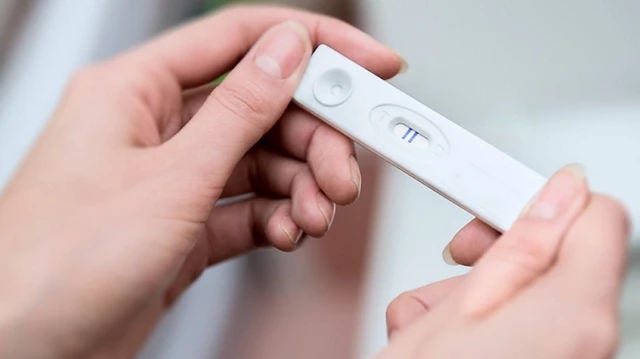
The tests are designed to detect raised hormone levels in your urine, so you will either need to dip the test stick in a sterile pot of your urine or place it in your flow. Either way, you’ll need to wait for what seems like a very long few minutes afterwards for the result.


pregnancy test

Interpreting the result

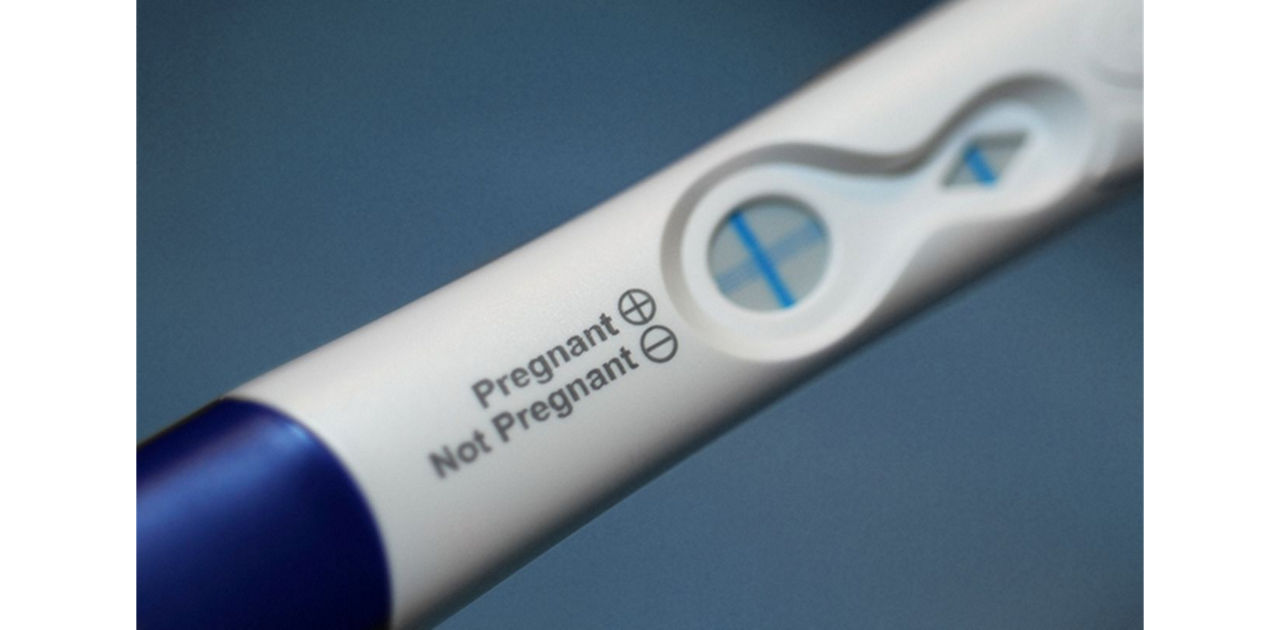
Most home pregnancy tests can tell whether or not you’re pregnant on the first day of your missed period. But different brands show positive and negative results in different ways, so always read the instructions. Some will show a pink or blue line for positive, or a plus symbol. You can also buy digital tests which state ‘pregnant’ or ‘not pregnant’ in the test screen.


False negative result

There are several reasons why you may get a negative result. Firstly you might not be pregnant. Or you might not be making high enough levels of hCG for the test to detect it. This can happen if you test too early. So if you suspect you are pregnant, wait at least three days before testing again.

Next steps

Home pregnancy tests are so accurate now that it isn’t usually necessary to have an hCG blood test at your doctors. However, if you are pregnant, you will need to inform your GP so that they can start planning your antenatal care.

Related articles

mom and baby

Need some help?

You can get quick answers to common questions in our FAQs.

Alternatively, if you need help with general pregnancy or baby advice, or maybe on using or ordering our products - our expert team are always on hand to talk about feeding your baby. 


1. NHS UK. 2013 Available at http://www.nhs.uk/chq/pages/948.aspx?CategoryID=54&SubCategoryID=127 [Accessed June 2015]
reference text

Last reviewed: 4th July 2016

Share this article

Favourites_Cards

Join Aptaclub for a chance to win a £100 John Lewis voucher, plus expert feeding advice, expert parenting tools, helpful checklists and the latest deals straight to your inbox.

Your email will be used to create your account and to recognise you when you contact us. We may also use your email to match data for research purposes.
Loading....
This field is required Please retype or use an alternative email address with a minimum of two letters, containing an @ symbol i.e. email@email.co.uk Your email has been verified. You can now register Please verify your email before submitting. Name validation https://bpi.briteverify.com/api/public/v1/fullverify 2b465552-a427-4a22-b5a8-aaba7770bf1d
Your password must be a minimum of 8 characters, with at least 1 letter, 1 number and 1 special character.
This field is required Please ensure your passwords match and contain a minimum of 8 characters, with at least 1 letter, 1 number and 1 special character.
Cow & Gate products excluding first infant milks and food for special medical purposes.
Please tick this box
Before we send you advice and information on infant feeding (for babies below 6 months), we're required to ask for your consent.

It looks as though you already have an account with us via [Aptaclub/C&G Babyclub] – please try your password for that account to login, or click 'forgot my password' to reset.

Please correct the errors in the form

By registering you're confirming you agree with our T&Cs and Privacy Policy. You can opt out anytime.

x